Wednesday, September 17, 2008

Whisk Wednesdays—Éstouffade de Boeuf Provençale (Braised Beef Casserole, Provence Style)

Éstouffade de Boeuf Provençale (Braised Beef Casserole, Provence Style)Éstouffade (Es-too-fahd) de Boeuf Provençale or Pot Roast. Which sounds better? The French have a flair for making food sound fancy and delicious. And this dish doesn't just sound delicious, it is delicious.

Éstouffade is a beef stew simmered slowly in a covered casserole dish. The technique is braising, where your goal as "Chef" is to take a cheap, tough cut of meat and make it tender and tasty. Unlike stewing which uses small chunks of meat, braising usually uses a large cut of meat. Turning a hunk of meat into a tender morsel is a bit of magic and science.

A Demo
A few years ago, I attended a demo at Le Cordon Bleu in Basic Cuisine, and it was this class #16 " Les Braisages (Braising)". I casually walked into the classroom before it began, as I have often done for other classes. I and another visitor both found a spot to sit and watched the Chef prepare for the class. I was wondering why the students milling about in the hallway outside weren't coming in, but I realized that at precisely 8:15 a.m., they were allowed to enter and find their seats. Of course, they all addressed the Chef as "Chef" with a capital "C". "Yes, Chef" and "Excuse me, Chef" were heard throughout the morning. I thoroughly enjoyed being a fly on the wall during this demo class. I've enjoyed looking over my notes from that class {after finding them buried under a huge pile of recipes yet to try].

The recipes covered that day were

Boeuf à la mode (Pot-roast)
Carré de porc braisé nivernaise (Braised pork rack with carrots, onions, potatoes and lettuce)
Navarin d'agneau printanier (Braised lamb shoulder stew)

As the Chef prepared the dishes, he talked easily about how lamb is fed, how long it takes to grow a chicken, the use of steroids and antibiotics in poultry, the benefits of organic meat, and occasionally quizzed the students about terminology.

As he was explaining how to butcher meat and the benefits of doing it by hand in your own kitchen, one student bravely asked why he couldn't go to the butcher and buy it already cut. The steely eyes and frustrated tone of the Chef answered him quickly, saying that a chef must be able to do all the food preparation.
"A good chef is worth ten doctors. In Napoleon's army, every captain was a chef."
– So Said the Chef at Le Cordon Bleu that day
Choose the Meat
The meat you select for braising should be one of the leaner, tougher cuts, such as shoulder, shank or chuck. {Save your tenderloin for the grill!} Also, the shank adds more gelatin to the mix so the sauce is thicker at the end of the cooking process.

Beef Cuts
Fatten the Cow
Pork fatback is NOT bacon. I learned this the hard way. I used bacon. It's what I had in the refrigerator. I didn't have pork fatback. I should have gone to a butcher, I know. The bacon added too much flavor to this dish. Go get yourself some fatback, ya hear?

According to Chef, bacon has lots of water in it, shrinks more, and leaves more fat in the pan. {And an over-powering bacon flavor!}

Ok, so if you can't get any fatback, the next best thing is salt pork. It's not bacon either. Even if you get this salt pork, you must blanch it for 10 minutes, rinse, dry {repeat?} to remove all the extra salt they use to cure it.

Before using fatback in the beef, the Chef at the demo class said to marinate the fatback in cognac for 10 minutes. {I wish I'd found my notes before making this!}

Then, you cut the fatback into strips so that you can insert this fat into the lean cut of meat you're about to braise. {Sounds like cheating to me. Or, a better cheat might be to buy a well-marbled piece of meat.} The fat helps to keep the meat from drying out.

Peter Hertzmann has a great article about Boeuf à la mode where he also demonstrates his larding technique and in the end discusses whether or not larding was worthwhile.

Marinate
After adding fat to the lean cut of meat, it gets marinated {for up to 24 hours, if you can, for best flavor}.

The marinade has the usual suspects: onions, carrots and a Bouquet Garni. Tomatoes, garlic, red wine, olive oil and cognac round it out. {You're supposed to turn the meat after 12 hours. Oops. Forgot to do that.}

Braise
Now, it's time to braise. This is a brown braise, where food is browned first (seared) and then dark ingredients, such as red wine, are added.

After straining the marinade in a bowl and setting it aside for later, pat the beef dry so that it can sear. When you sauté the beef, you can add a bit of butter with the oil for extra flavor. Searing caramelizes the outside of the beef and adds more flavor. After it's seared {not burnt!}, drain the fat and set the meat aside to rest. Fry up some bacon. {This time you can use bacon as we all know and love it.} Add the vegetables from the marinade and cook them off until golden. Sprinkle some flour on this mixture and cook for a bit to remove the flour taste. The flour will help thicken the sauce at the end. Then add the strained juice from the marinade — -it's purple! This helps deglaze the pan and pick up all those {burned} bits from the bottom of the pan, called fond.
"…[fond] represents a portion of the essential principles of the roast
fallen from it in the process of cooking."
— Escoffier
Add the meat back into the pan, the tomatoes, the Bouquet Garni, and a bit of salt. The liquid should cover 1/3 of the meat. Add more water if it doesn't meet this stringent braising requirement. Add the vegetables from the marinade back to the pot. Bring to a simmer and then put it in the oven, covered, to finish, slowly. Don't let it boil. The liquid and steam cook the meat slowly until it's very tender. If it's cooked too fast, it will be dry and tough.

I found this great article about braising.

Thicken {or Reduce} the Sauce
"Reduce over medium heat until the sauce thickens slightly."
— from the recipe for Éstouffade de Boeuf Provençale (Braised Beef Casserole, Provence Style)
After taking the meat out and putting it aside to rest a spell, reduce the sauce. As you reduce, you should skim away any fat that comes to the surface. Reducing sounds easy, but I always have trouble with this step — not the skimming but the thickening part. I have to resist the urge to quickly make a roux to thicken the juices. I thought I reduced it enough, but my sauce was runny. Back to the stove to reduce it further, I went {the next day}. After reading these tips, I was prepared to dig out my potato flour to thicken it slightly.

The recipe says to add olives to the sauce {but I didn't}.

Recipe: Éstouffade de Boeuf Provençale (Braised Beef Casserole, Provence Style)

Éstouffade de Boeuf Provençale (Braised Beef Casserole, Provence Style) mise en placeYou can find the recipe for Éstouffade de Boeuf Provençale (Braised Beef Casserole, Provence Style) in the book Le Cordon Bleu at Home (affiliate link). To see how the rest of the Whisk Wednesdays group fared with this week's recipe, click here (or check out the sidebar) and then click on each blogger!

Purple Marinade
The marinade is PURPLE!

Tasting Notes
I made some {well, many} mistakes on this seemingly, easy pot roast. Too bacon-y. Too over-cooked. Sauce was runny. But, everyone enjoyed it, even so, and it was even better the next day. {No anchovies this week! Yay} Next time, I'll try Harold McGee's tip to use a cooler oven (200˚F for the first two hours and then 250˚F for the last hour). I'll also check my butcher for fatback. And, I'll spend more time reducing the sauce. And maybe I'll ask for a Moroccon Tagine for Christmas! That should definitely help!

Next Week (September 24)
• Blanquette de Veau à l’Ancienne (White Veal Stew with Onions and Mushrooms) page 55-56

. . . . . . . . . .

Running total: $752.74 + $21.00 (beef) + $6.46 (marinade) + $4.48 (finishing) = $784.68

Butter used so far: 7 pounds, 27 tablespoons

More to Explore:



Does My Blog Look Good In This? DMBLGIT September 2008 Edition

Andrew, who keeps busy with his three blogs (Spittoon, Spittoon Extra, and The Foodie List for UK foodies) and administering the Does My Blog Look Good In This? in his spare time cried out for help with the DMBLGIT for the upcoming months. I sent off an innocent email offering to help host, and here it is, in my lap, with less than 2 weeks left this month!

DMBLGIT is a monthly food photography event, called by some as "the grandest foodporn event available" on the web. Check out the amazing winners from last month at Andreea's blog On (Glorious) Food and Wine. Here are a few other tidbits I've discovered:

- In 2005, Ronald from love Sicily came up with the idea of a food blogging event focused on food photography while on a train from Southampton to London. This was the beginning of DMBLGIT. Now, it's administered via Is My Blog Burning? (IMBB).

- Matt from Matt Bites designed those amazing badges (and will be appearing on Martha: The Martha Stewart Show today, Sept. 17, 2008). Helen from Grab Your Fork was influential in this initiative as well.

- Click HERE to see a compilation of winners from past DMBLGIT contests thanks to Annie and Nate from House of Annie!

I'll keep this brief. Submit your photos. I can't wait to see them, and I'll let you know who the judges are in another post. Since I can't participate this month, I'll share with you the photo I was going to submit:


Consommé Madrilène (Chilled Consommé with Red Peppers and Tomatoes)
Consommé Madrilène
(Chilled Consommé with Red Peppers and Tomatoes)

DMBLGIT?

Judging
Photographs are reviewed by a panel of judges, who score them in three categories: edibility, aesthetics, and originality. The host then compiles the scores to determine the winners. The specific things the judges will be looking for are as follows:

- Aesthetics: composition, food styling, lighting, focus, etc.
- Edibility: “does the photo make us want to dive in and eat the food?”
- Originality: the photograph that catches our attention and makes us want to say “wow!”, displaying something we might not have seen before.
- Overall Winner: top overall scores in all three categories combined.

There are three overall winners for photographs with the highest point totals in all three categories combined, and one winner in each of the three individual categories.

Rules
- Only one entry per person (a single photograph, no diptychs)
- The photograph must have been taken by you.
- The photograph must have appeared on your blog during the month of August.
- Entries must be received by September 30, 2008 at midnight EST (U.S.)

What do you have to do to join the event?
Send your entry to whiskfoodblog {at} gmail (dot) com with DMBLGIT as the subject. Please include the following:
- your name
- your blog’s name and URL
- your photograph’s title
- the URL of the post containing the photograph
- type of camera used, lens if you wish
- Please send photos in an attachment to your email in a jpeg format, of no more than 500 pixels in width

Gallery
All submissions will be posted to the September 2008 DMBLGIT gallery, which will be updated as I receive entries. Please give me a few days to update the gallery with your submission! And make sure yours is included once I start publishing them.

I look forward to your entries. Good luck!
~Shari


Tuesday, September 16, 2008

Tuesdays with Dorie—Chocolate Chunkers

Chocolate ChunkersThree types of chocolate chunks (bitter, semi, white), salted peanuts, raisins, {with a bit of batter thrown in to keep all the chunks together}. This is really a brownie disguised as a cookie.

In the introduction to the cookie, Dorie says these cookies are based on ones at Soho Charcuterie (called Chocolate Globs) and Sarabeth's (called Chocolate Chubbies), and is also a distant relative of Maida Heatter's Mulattoes. According to Ina Gartner, her brownie recipe is based on these same cookies, and they used to fly out the door of her specialty food store. After tasting these chocolate chunkers, I believe it!
"A balanced diet is a cookie in each hand."
— Author unknown
Playing Around
Chocolate Chunkers in ring moldsA while ago, I found these vintage aluminum ring molds online on our local Freecycle Network. After spraying the molds with cooking spray, I spooned some of this sticky, chunky cookie dough into the molds and baked them off. Straight from the oven, they were like a rich brownie. After cooling, they became hard like a cookie and are better eaten by breaking pieces off with your fingers. I tried the same thing with my mini bundt cake pan with the same results.

Chocolate Chunkers in mini bundt pans

Recipe: Chocolate Chunkers


Ingredients for Chocolate ChunkersYou can find the recipe for Chocolate Chunkers in the book Baking: From My Home to Yours (affiliate link) by Dorie Greenspan. To see how the rest of the TWD group fared with this week's recipe, click here and then click on each blogger! Thanks to Claudia of Fool for Food who chose the recipe for this week.

Chocolate Chunkers
Tasting Notes
These were a hit at our house. Personally, I liked them with the raisins, but I left them out of half the batch for some of my more picky eaters. The salty nuts cut the sweetness of the chocolate nicely.
"Think what a better world it would be if we all, the whole world,
had cookies and milk about three o'clock every afternoon
and then lay down on our blankets for a nap."
— Robert Fulghum
Recipe for Next Week (September 23)
Dimply Plum Cake on page 41 chosen by Michelle of Bake-en.

More to Explore:


Saturday, September 13, 2008

The Omnivore's 100 Poll


In August, a meme was started by John of Very Good Taste that has become viral among foodies: The Omnivore's 100. I've done it. My friends have done it. We ooh and aah over how many each of us have tasted. It's kinda fun. Of course, everyone has their own ideas about what should and shouldn't be on the list. Here are some other lists you might want to check out:

• A vegetarian one by Barbara at Tigers & Strawberries.
• A vegan one by Hanna at Bittersweet.
• A Japanese one by Maki at Just Hungry.

I keep seeing it pop up in many food blogs, and I think a POLL is in order. I'd love to know how many of The Omnivore's 100 you've tried. 

The poll is in the upper-right corner of my blog! You can change your vote at a later date, too.

{As of September 13, 2008, I've tasted 53.}

I think this is the start of an idea for a New Year's Eve party. Everyone can bring something they haven't tried from the list as an appetizer. The one who's tried the most wins a prize. Any other omnivore party ideas?
"All of life is a dispute over taste and tasting."
—Friedrich Nietzsche

More to Explore:


Friday, September 12, 2008

Tuesdays with Dorie {Rewind}—Quintuple Chocolate Brownies

Quintuple Chocolate BrowniesI'm slowly working through the recipes I missed before I joined Tuesdays with Dorie and Week 2 of TWD was all about chocolate! Four types of chocolate, in fact. In a brownie. {Actually, the recipe called for 3 ounces of unsweetened chocolate, but I used semi-sweet instead, and it turned out great!}
All I really need is love but a little chocolate now and then doesn’t hurt!
— Lucy, "Peanuts"
4 types of chocolate
Using the best chocolate I could find (Callebaut) made these brownies taste even better. As well, the crunch from the pecans that I used was a nice contrast to the chocolate.

Recipe: Quintuple Chocolate Brownies

Ingredients for Quintuple Chocolate BrowniesYou can find the recipe for Quintuple Chocolate Brownies in the book Baking: From My Home to Yours (affiliate link) by Dorie Greenspan. To see how a few of the early TWD adopters fared, click Laurie of quirky cupcake, Michelle of Sugar and Spice, and April of Abby Sweets.

Yield: This recipe made 24 regular-sized cupcakes.

Quintuple Chocolate BrowniesTasting Notes
They were the best brownies I've ever tasted! And my nephew and daughters had to earn their brownie by posing for some food photography! In the end, they thought it was worth it! {However, one picked off all the chocolate-coated purple sunflower seeds and gave them to me. Another didn't like the nuts, but I had only put nuts in half the batch so she hunted for one without the offending ingredient. And another wanted hers without frosting! Besides that, they were a huge hit!}
"Anything is good if it's made of chocolate."
— Jo Brand
Other Brownie recipes you may like:
Brownie Pops
French Chocolate Brownies


Wednesday, September 10, 2008

Whisk Wednesdays—Salade de Poulet aux Epinards (Spinach Salad with Chicken)

Salade de Poulet aux Epinards (Spinach Salad with Chicken) in a rice bowlVinaigrette is versatile — it can be used as a sauce or marinade, but it's most commonly used as a dressing on salad. In this recipe, the vinaigrette is used as a marinade on the mushrooms and as a dressing for the salad.

Note to brides: Do not order a Raspberry Vinaigrette on slippery butter lettuce for your wedding dinner! It may end up on your future mother-in-law's dress {or worse, yours!}.
"If you pour oil and vinegar into the same vessel,
you would call them not friends but opponents."
—Aeschylus
Oil & Vinegar
Oil — I used an extra virgin olive oil. {BTW, don't store olive oil in the refrigerator. It gets hard, and you have to wait a long time for it to pour again! I thought I was being so smart. Ha!} Use the best oil you can afford, but not something with a lot of taste since you don't want it to overpower the other ingredients.

Vinegar — I used a cider vinegar, but you could use any flavored vinegar (such as balsamic, sherry, or raspberry) or even citrus juice, such as lemon or orange juice. Don't use plain old white vinegar. Vinegar is made from the fermentation of alcohol {so that's why you should save any leftover red or white wine…if there's any to be saved!}.

Cooking {and baking, for that matter} is all about emulsions. A vinaigrette, which is usually a ratio of 3 parts oil to 1 part vinegar, is a temporary emulsion. Normally, oil and water (in this case, vinegar) don't mix. By whisking them together vigorously and adding the oil slowly, you create a temporary emulsion, not a permanent emulsion such as mayonnaise or hollandaise. If a vinaigrette separates, it's easy to just shake it or whisk it again to combine the ingredients. A bit of mustard or honey helps stabilize the vinaigrette and keep it emulsified.

Making Vinaigrette
To make a vinaigrette, first mix the vinegar and aromatics (for this recipe, chives and shallots). Then slowly whisk in the oil. {You can use a blender, food processor or shake it in a jar if you don't want to do it the old-fashioned way.}

Tip: It's best to use oil and vinegar that are at room temperature. After whisking, let the mixture sit for up to 3 hours at room temperature to marry the flavors together.

You can store vinaigrette in the refrigerator in an airtight container for up to one week.

Here's a video showing how to make a vinaigrette.
"To make a good salad is to be a brilliant diplomatist —
the problem is entirely the same in both cases.
To know exactly how much oil one must put with one's vinegar."
—Oscar Wilde
Playing Around

Rice Paper bowlIf you read my post on Chocolate Malted Whopper Drops, you'll know that I was at the most amazing restaurant over the weekend called Plus Minus Café in Mont Tremblant. I was inspired by the salad that was served in a rice bowl, so I asked the waiter how the salad bowl was made. He satisfied my curiosity…

salade from Plus Minus Café
from the menu at Plus Minus Ca

Take rice paper and dunk it in a large vat of a deep fryer and use a ladle or spider to form it. So, I went home and tried it. At first I was a little wary of deep frying since I'd had some trouble with hot oil over-flowing my pot before! I bravely tried it again, and it worked. Once the oil reached 350˚F, I carefully lowered a sheet of dry rice paper between my spider and a spaghetti ladle. {I wish I'd had one of these!} In less than a minute, the rice bowl was fried and ready to be dried and filled with salad.

I also tried baking a rice bowl. I sprayed a heat-proof bowl with cooking spray. Then I dipped a piece of rice paper in water to soften it. After a minute of soaking, I carefully laid it into the bowl. After baking it at 400˚F for 5-10 minutes, it was crisp and translucent.

Greens and Sardines
Go Greens MesclunFor the salad part, the recipe called for spinach. But why go with boring old spinach when you can eat flowers along with 30 or more other different greens? I found a bag of these delicious greens at the Byward Fruit Market that sells some of the most exotic fruit and vegetables you can find in Ottawa. The bag of greens I picked up contained pansies, nasturtiums, and every imaginable leaf and petal that you can eat. Plus it looked pretty!

Chicken or sardines? The recipe called for sardines. After my fiasco with anchovies, I wasn't ready to stomach sardines this week. A chicken salad sounded much more elegant! After marinating it in lime juice, shallots, and salt, and pepper for about an hour, I grilled it on the barbeque.

Recipe: Salade de Poulet aux Epinards (Spinach Salad with Chicken)

Salade de Poulet aux Epinards (Spinach Salad with Chicken) mise en place
Click to enlarge image

You can find the recipe for Salade de Poulet ou Sardines Crues aux Epinards (Spinach Salad with Chicken or Sardines) in the book Le Cordon Bleu at Home. To see how the rest of the Whisk Wednesdays group fared with this week's recipe, click here (or check out the sidebar) and then click on each blogger!
Vinaigrette made without the use of potassium sorbate, xanthan gum, sodium benzoate, calcium disodium EDTA, or soya lecithin.
Salade de Poulet aux Epinards (Spinach Salad with Chicken) in a rice bowlTasting Notes
This was an easy meal and everything came together without a lot of dishes! The fact that you can eat the bowl makes it extra fun, and a bit of crunch in the salad is just what's needed. I also sprinkled some sea salt on top of the salad to kick up the flavor.
"A bowl of vegetables with someone you love is better
than steak with someone you hate."
—Proverbs
Next Week (September 17)
• Éstouffade de Boeuf Provençale (Braised Beef Casserole, Provence Style) page 139-140 {discussion of braising and stewing, page 140}

. . . . . . . . . .

Running total: $734.85 + $15.09 (salad) + $2.80 (vinaigrette) = $752.74

Butter used so far: 7 pounds, 27 tablespoons


Tuesday, September 9, 2008

Tuesdays with Dorie—Chocolate Malted Whopper Drops

Chocolate Malted Whopper DropsA bit of malted milk and a bit of chocolate are the perfect combination for these kid-approved candy cookies!

Malteds and Milo
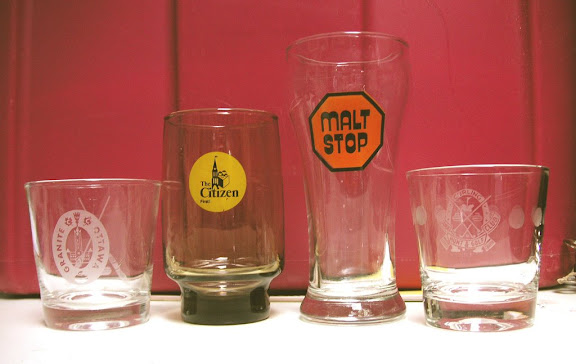
Malteds bring back lots of memories for me. If you grew up in Canada, you probably remember The Malt Stop at The Bay that had a red stop sign as their logo. Every time we shopped there, I would beg my mom or dad to head to the basement to buy me one. I remember having it a lot, so I think it was a favorite drink of my parents as well! It was served in a special tall glass with a "Malt Stop" sign on it. Unfortunately, all the Malt Stops have closed.

The Malt Stop glass
Photo from Flickr by "fortunate son"

If you know of a good place to get a malted milk shake, let me know.
Also, if you have a good malted milk shake recipe,
pass it along or leave a comment!
Another favorite treat when I was growing up was (and still is!) Milo, a chocolate malt powder that is a common drink served to children in Australia. When I was a kid, family friends would bring a tin back from their Australian travels, and we would measure it out tablespoon by tablespoon making sure we all had our fair share. We'd scoop it onto a tall glass of milk, eat most of the chocolate with a spoon, and stir in whatever was left into the milk.

Recently, a version of Milo from the Caribbean started showing up on grocery store shelves, but it doesn't compare in taste to the Australian version, which is more chocolatey. Last year, I found a small local shop that sells the version from Singapore, so now I'm set. {I even have a canister that's labeled "Milo"!}

MiloMilo Bar
When I was travelling in Australia years ago, I tasted the best chocolate bar in the world — the Milo Bar. It was pressed Milo covered in chocolate. I savored every Milo bar I could find, and it's still my favorite chocolate bar, but unfortunately it's not sold in Canada. After some internet research, I found that the bar now has a caramel layer. Although I haven't tasted this version, I can't imagine it tasting better than the original. In fact, there is a petition to "bring back the original Milo bar!"
I even kept a wrapper from my travels to Australia, and I'm always looking for recipes that use Milo so I was excited to try it in this cookie recipe. {I wonder what this recipe would taste like with this bar in it instead of the Whoppers....}

Milo BarYou can buy a Milo Bar {the new version} through an online store, Cyber Candy, in the UK. For $26.90 (Canadian), I could buy one Milo bar (including shipping). {I think I'll ask for it for my birthday!}
Do you have a favorite candy bar that you can't get locally? What is it?
Taste Test Time: Milo, Horlick's Malt Powder or Ovaltine
The recipe called for malted milk powder (or Ovaltine, regular or chocolate-flavored). "Which one I choose?" my daughter used to say. Instead of choosing, I decided to try a taste test and use Milo, Horlick's Malt Powder (vanilla), and Ovaltine (original chocolate). If you've never tasted Milo before, here's a great article that compares it to Ovaltine.

Whoppers or Maltesers
"Whoppers: the original malted milk balls" — Hershey's Whoppers
"Maltesers: the lighter way to enjoy chocolate" — Mars' Maltesers
For the candy part of this cookie, the recipe calls for Whoppers (also known as Maltesers in some parts of the world). Here's a great video to information about how Maltesers are made. {I was only able to find Maltesers, so I can't give you a taste test on Whoppers versus Maltesers. Update: I have been able to find a bag of both and the Maltesers win hands down.}

Playing Around
This past weekend, we took a trip to a great winter ski resort close to Ottawa called Mont Tremblant. In the off season, it's a great place to hike, shop, golf, and eat! We did a lot of the last activity and not enough of the others!

We ended up at an amazing restaurant called Plus Minus Café. From the amuse bouche, which was a spectacular drink that's worth a trip of its own, to the dessert, this restaurant blends the boundaries between art and food in a way I've never seen before.

I was inspired by Sylvain Proulx, the artist-chef at Plus Minus Café, to try making sugar-coated spaghetti {or spaghettini} as a way to show off these candy cookies. After dipping the raw spaghetti in water and shaking off the excess, I dipped it in colored sugar. Then, I skewered a cookie and popped them into a vase — a candy cookie bouquet. {Use spaghetti for this, not spaghettini which is thinner and weaker.}

Sugar-coated spaghetti
"The discovery of a new dish does more for human happiness
than the discovery of a new star"
— quote on menu at Plus Minus Café

Recipe: Chocolate Malted Whopper Drops

Ingredients for Chocolate Malted Whopper DropsYou can find the recipe for Chocolate Malted Whopper Drops in the book Baking: From My Home to Yours (affiliate link) by Dorie Greenspan or here. To see how the rest of the TWD group fared with this week's recipe, click here and then click on each blogger! Thanks to Rachel of Confessions of a Tangerine Tart who chose the recipe for this week.

As some TWD bakers noted during the week in the P&Q section, the recipe in the book doesn't suggest a temperature to bake the cookies at. Dorie provided some help on this and left a comment at the TWD blog:

"The temperature was left out of the recipe for the Whoppers —
it should be 350 degrees F."
As one TWD member, Erin, suggests through her blog name: When in Doubt…Leave it at 350.

Tasting Notes
My kids were thrilled after school this week. My youngest even lost her wiggly tooth after taking a bite of one of these delicious candy cookies! Of course, my favorite version of these cookies were the Milo ones. And, I'm glad to report that my kids liked these too. My husband preferred the ones made with Horlick's (Hmmph). The ones made with Ovaltine were our least favorite, but they were still delicious enough to gobble up.

More to Explore:


Wednesday, September 3, 2008

Whisk Wednesdays—Brochet au beurre blanc (Whole Poached Pike with White Butter Sauce)

Poisson au beurre blanc et rouge (Poached Fish with White and Red Butter Sauce)

Poisson au beurre blanc et rouge (Poached Fish with White and Red Butter Sauce)

Beurre blanc (burr BLAHN or burr BLAHNGK), which means "white butter", is a classic French sauce that turns half a pound of butter into something "light" and delicious. It's similar to Béarnaise sauce {without the tarragon or eggs} since it's a reduction of vinegar or white wine and shallots into which butter is whisked in, but it's a little easier since no eggs are involved. Again, we're emulsifying this week!

This recipe called for brochet, or pike. The River Loire, which is the longest in France, is home to numerous fish, including pike. Unfortunately, the Loire River is too far from Ottawa and pike was not to be had. After seeing numerous recipes with beurre blanc over a variety of fish, I decided to go with our favourite — Salmon with a beurre blanc — and for a color difference — Sea Bass with a beurre rouge.

A bit of history

There is some controversy about the history of beurre blanc. One theory is that the Anjou region is the birthplace of this sauce...

Recipe

Click to enlarge image

Poisson au beurre blanc recipe image

Poisson au beurre blanc (Poached Fish with White Butter Sauce)You can find the recipe for Brochet au beurre blanc (Whole Poached Pike with White Butter Sauce) in the book Le Cordon Bleu at Home (affiliate link).

Tasting Notes

Beurre blanc is delicate, light, and full of fat! But it's so much easier than making a Béarnaise...

Running total: $711.62 + $4.50 (court bouillon) + $12.55 (fish) + $6.63 (beurre blanc) = $734.85

Butter used so far: 7 pounds, 27 tablespoons

Poisson au beurre blanc et rouge (Poached Fish with White and Red Butter Sauce)Beurre blanc (burr BLAHN or burr BLAHNGK), which means "white butter", is a classic French sauce that turns half a pound of butter into something "light" and delicious. It's similar to Béarnaise sauce {without the tarragon or eggs} since it's a reduction of vinegar or white wine and shallots into which butter is whisked in, but it's a little easier since no eggs are involved. Again, we're emulsifying this week!

This recipe called for brochet, or pike. The River Loire, which is the longest in France, is home to numerous fish, including pike. Unfortunately, the Loire River is too far from Ottawa and pike was not to be had. After seeing numerous recipes with beurre blanc over a variety of fish, I decided to go with our favourite — Salmon with a beurre blanc — and for a color difference — Sea Bass with a beurre rouge.

{Confession time: Although I should have practiced my fish filleting, I chose the easy route and bought fillets ready to poach. I did, however, buy a trout that needs knife attention and will give that a go sometime this week.}

A bit of history
There is some controversy about the history of beurre blanc. One theory is that the Anjou region is the birthplace of this sauce and that it was first served at the restaurant "La Poissonnière" in Anger. The more popular theory is that around the beginning of the 20th century, a cook named Clémence Lefeuvre served this sauce at her restaurant "La Buvette de la Marine" on the banks of the Loire River near Nantes. The legend says that she meant to make a Béarnaise sauce but forgot to add the tarragon and egg yolks.

A bit of butter Beurre blanc is mostly butter, so it's important to use one you like. No margarine allowed! Jean-Yves Bordier makes the "best butter in all of France”. He comes highly recommended by many foodies, including Clotilde Dusoulier and David Lebovitz.

Butter sculptureSince Bordier's butter isn't imported to any stores in Ottawa, I decided to try my own taste test and gathered up all the varieties of butter I could find in the Byward Market in Ottawa. I found seven varieties: three unsalted and four salted. Then, at home, we enjoyed a taste test. {Have you ever tasted seven different butters at one sitting?!}

Click to enlarge image
Butter taste testI was amazed to find each one had its own distinct flavor and qualities. One tasted acidic, another nutty, one was bland, another rich. There was also no agreeing on which one was best, so I made the executive decision as the "chef" and picked my favorite unsalted one to use in the beurre blanc sauce (Saputo Unsalted at $5.99 a pound, which is $1.50 more than the brand I usually buy!).
"It was the best butter,”
the March Hare meekly replied
— Lewis Carroll
Most beurre blanc sauces call for unsalted butter, but I read one post by Ms. Glaze's Pommes d'Amour where she uses salted butter without fail. {I'll have to give that a taste test someday.}

A bit of cream…or not
Traditional beurre blanc doesn't include cream, but many recipes (including the one in Le Cordon Bleu at Home which uses crème fraiche) include it to help stabilize the sauce and guard against the sauce breaking. The cream provides more emulsifying power. {You can find out more great science facts behind this sauce in Cookwise by Shirley O. Corriher.}

If cream is added, the sauce is called Beurre Nantais.
A bit of wine
I made both a beurre blanc using white wine and white-wine vinegar and a beurre rouge using red wine and red-wine vinegar. The pink salmon had the the beurre blanc, and the white sea bass was ladled with beurre rouge.

Beurre blanc et rougeFor the beurre blanc, I used Muscadet (Muss-ka-day), which means "wine with a musk-like taste", and it's the wine usually used in this sauce. It's a dry French white wine made in the Loire Valley near the city of Nantes that uses the Melon de Bourgogne grape varietal. I was able to find a good bottle of Muscadet at a reasonable price at my local wine store.

For the beurre rouge, I used a rosé from the Languedoc region in France.

"Le vin est la plus saine des boissons."
"Wine can be considered with good reason as the most healthful
and the most hygienic of all beverages."
— Louis Pasteur (printed on the cork of the Muscadet)
A bit of know-how
The first step in making beurre blanc is reducing the shallots, wine, vinegar, thyme and bay leaf until it's a syrupy glaze. Once you have the glaze, let this mixture cool for a bit and remove the thyme sprig and bay leaf. [If called for in the recipe, add the cream or crème fraiche. I used cream since I didn't have any crème fraiche.] Then slowly whisk in the softened butter, a bit at a time. Whisk constantly. Take the pan on and off the heat to whisk in the butter without melting it. Make sure you don't let the mixture boil or it will separate, and it cannot be re-emulsified at this point. Taste. Add salt. Taste. Add more butter if it's too acidic. Taste.

The sauce will separate above 58ºC (136ºF) and solidify below 30ºC (86ºF).
When you whisk cold butter into a hot sauce, it's called monter au beurre (mounting a sauce with butter). {I tried making this sauce once with cold butter and once with softened butter and found it much easier when the butter was soft. I had to use the heat more often and whisk more vigorously when I used the cold butter.}

Traditionally, the sauce is not strained. If the shallot is chopped fine enough, it doesn't distract from the texture of the sauce.

Beurre blanc is best served immediately, but can be held in a thermos or over a simmering water bath. If re-heated, it will break easily. Since it doesn't contain eggs there isn't the same worry of bacteria growth that you have with Béarnaise and Hollandaise.

To save time if you're entertaining, you can prepare the reduction of shallots, wine, vinegar, thyme, and bay leaf ahead of time and whisk in the butter just prior to serving.

A bit of variety
To change the taste of beurre blanc, you can use all sorts of different flavors in the reduction or whisk in one of the compound butters mentioned last week instead of plain unsalted butter. I used the Maître d'Hôtel compound butter in a third version that I made, which definitely gave it a flavor boost. Here are some other ideas for flavoring beurre blanc.

A bit of entertainment
Here's a great video showing how to make beurre blanc.

A bit of fish poaching
To cook the fish, the recipe calls for a court bouillon, which is a fancy name for cooking broth. After you've brought the broth ingredients to a boil and simmered them for about 15 minutes to marry the flavors, you let the mixture cool a bit before adding the fish. {I threw the pot into the refrigerator to speed up the process since I was running behind.} Add enough water to cover the fish, put the lid on and bring to a boil. Remove the pot from the heat and let cook for about 30 minutes, covered. Pretty simple.

Recipe" Brochet au beurre blanc (Whole Poached Pike with White Butter Sauce)

Click to enlarge image
Poisson au beurre blanc (Poached Fish with White Butter Sauce)You can find the recipe for Brochet au beurre blanc (Whole Poached Pike with White Butter Sauce) in the book Le Cordon Bleu at Home (affiliate link). To see how the rest of the Whisk Wednesdays group fared with this week's recipe, click here (or check out the sidebar) and then click on each blogger!

Tasting Notes
Beurre blanc is delicate, light, and full of fat! But it's so much easier than making a Béarnaise. I enjoyed the beurre blanc made with the compound butter, but my husband liked the beurre rouge best. These sauces definitely make plain, old, boring fish more delicious to eat! Too bad about the calories!

Next Week (September 10)
• Salade de Sardines Crues aux Epinards (Spinach Salad with Fresh Sardines) page 197-198 {discussion of Vinaigrettes page 55}…Just so ya know: I won't be using the sardines!

. . . . . . . . . .

Running total: $711.62 + $4.50 (court bouillon) + $12.55 (fish) + $6.63 (beurre blanc) = $734.85

Butter used so far: 7 pounds, 27 tablespoons
. . . . . . . . . .

More to Explore:


Tuesday, September 2, 2008

Tuesdays with Dorie—Chunky Peanut Butter and Oatmeal Chocolate Chipsters

Chunky Peanut Butter and Oatmeal Chocolate Chipsters as Logs Chunky Peanut Butter and Oatmeal Chocolate Chipsters as logsOperation Baking Gals is a group started by Susan of She's Becoming DoughMessTic dedicated to shipping baked goodies once a month to soldiers stationed overseas. According to Dorie, these Chunky Peanut Butter and Oatmeal Chocolate Chipster cookies are good candidates for shipping, so “Give A Little Support” and bake these up!

{They’re also perfect as after-school treats for the kids!}

Playing Around
Cookies in Coin WrappersI tried baking these cookies in paper coin wrappers! I thought it might be a cool way to keep a log shape, and it worked {for the most part}.

To get the cookie dough in the wrapper, you just take a spoonful and push it in. I found using my hands was easier than a spoon.

I was running behind on my TWD post and too impatient to chill the dough as recommended in the recipe, so when they were baking, they gushed out a bit. But, after chilling them and then trimming the ends, they looked presentable. Plus, they didn’t get crispy, but stayed soft and chewy inside the wrapper.

I first tried this technique with the Granola Grabbers, where the dough is more crumbly, and it worked perfectly with that cookie dough.

Recipe: Chunky Peanut Butter and Oatmeal Chocolate Chipsters


Ingredients for Chunky Peanut Butter and Oatmeal Chocolate ChipstersYou can find the recipe for Chunky Peanut Butter and Oatmeal Chocolate Chipsters in the book Baking: From My Home to Yours (affiliate link) by Dorie Greenspan. To see how the rest of the TWD group fared with this week's recipe, click here and then click on each blogger! Thanks to Stefany of Proceed with Caution who chose the recipe for this week.

Baking time: I baked them in the coin wrapper for 15-18 minutes at 350˚F.

Yield: I halved the recipe, and it made 18 $2-Canadian-coin-size log cookies.

Chunky Peanut Butter and Oatmeal Chocolate Chipsters as logsTasting Notes
The oatmeal and chocolate combined with the peanut butter makes these cookies delicious! I loved how soft and chewy mine were. It's the perfect treat for the first day of school!

Recipe for Next Week (September 9)
Chocolate Whopper Malted Drops on page 85 Rachel of Confessions of a Tangerine Tart.

More to Explore: