Showing posts with label Class 10. Show all posts

Thursday, May 8, 2008

Sauce tomate (Tomato sauce)

Homemade Tomato Sauce Recipe Tomato Sauce
This class of stocks and sauces has taken me so long to get through. But, this is the last sauce for this class, and I’m ready to try using these stocks in more sauces in the coming weeks.

I made a tomato sauce earlier, called Portugaise sauce. Here is a slightly different tomato sauce using four different types of tomatoes: red, orange, yellow, and black.

TomatoesBlack tomatoes, which range in color from dark purple, deep brown, and bluish-brown, date back to the early 19th century, come from the southern Ukraine, and have a sweet flavor. I also used some red, orange, and yellow tomatoes in this sauce for variety.

"Tomato sauce isn't red, it's orange."

Watch a Pro
Here's a video of Giada de Laurentiis making tomato sauce.

Recipe: Sauce tomate (Tomato sauce)

Tomato Saucefrom Le Cordon Bleu at Home (affiliate link)

Serves: 4

Prepare the tomatoes concassée (score, core, blanch, peel, de-seed, and chop).

Prepare a Bouquet Garni. Mince the shallots and garlic.

Melt the butter and sauté that shallots for a minute or two. Add the minced garlic and cook for about 1 minute making sure it doesn’t burn. Add the diced tomatoes and the Bouquet Garni. Cook down for a bit. Season with salt and pepper. Serve with pasta.

Tasting Notes
This tomato sauce is delicious, and only gets better with time. We had it with pasta, and everyone enjoyed it. It tastes fresh and garlicy. Definitely a keeper recipe.

. . . . . . . . . .

Running total: $403.81 + $4.42 = $408.23

Butter used so far: 4 pounds, 30 tablespoons

. . . . . . . . . .

More to Explore:


Saturday, May 3, 2008

Fond brun clair de veau (Basic recipe for brown stock)

Beef and Veal Stock: The Ultimate Guide
Beef and Veal StockStock, stock, and more stock. My refrigerator is overflowing with all sorts of stock. White stock from last week’s post, and this week I have a fridge full of variations on a brown stock theme.

Brown stock. Who knew how complicated this topic would be. First, there’s the issue of beef versus veal, which led to research about collagen, which led to research about umami. Then, there’s the question about whether to roast the meat beforehand or not, which introduces the differences between carmelization and the Maillard reaction. All brown stock is supposed to be roasted, isn’t it? Yet, I found some veal stocks that were presented more like white stocks, namely from that inventive, amazing chef named Thomas Keller (Best California Chef in 1996 and the Best Chef in America in 1997, famous for his restaurant The French Laundry). It was a little overwhelming for what seemed at first to be a simple topic.

“You can’t have a good sauce if you start with a bad stock.”
The French Laundry Cookbook

To begin, I raided several butcheries of their treasured veal bones, or tried to. One butchery didn’t have any, another wasn’t willing to sell theirs, another charged me an arm and a leg for a bag o’ bones, and finally – jackpot – one gave me a bag for free. I’ll definitely be spending more time and money at that butchery in the future! And so, I made stock. In many variations. Beef, veal, roasted, not roasted, roasted with tomato paste, roasted without tomato paste, and finally the labor-intensive Thomas Keller way.

Brown stock 5 ways
Click for larger image

Now I have 40+ cups of stock to freeze and use up in the coming weeks, months, years! And some that I will only use as a sauce base for the best cuts of meat, like pulling out a prized bottle of wine from a cellar.


“Indeed, stock is everything in cooking. Without it, nothing can be done. If one’s stock is good, what remains of the work is easy; if, on the other hand, it is bad or merely mediocre, it is quite hopeless to expect anything approaching a satisfactory meal.”
Auguste Escoffier in Guide Culinaire (1903)


Bovine collagen
You can make brown stock from chicken, beef, or veal. Since I tried chicken stock last week, I wanted to try brown stock made with beef and veal.

As I learned last week, stock is the most important flavor carrier for soups and sauces. But I didn’t know that the magic ingredient in stock is collagen.


Collagen is a protein in animals that connects and supports bodily tissues, such as skin, bone, tendons, muscles, and cartilage. While the collagen from the bones cooks, it dissolves into gelatin, picks up the flavors from the bones and aromatic vegetables, and transfers them into the stock. As the stock simmers, it’s collecting healthy minerals from the bones like calcium, magnesium, phosphorus, silicon, sulphur, and trace minerals. Good stock builds strong bones, relieves sore throats, and helps the sick. The resulting gelatin is the ‘glue’ that combines all the flavors and gives body to the soup or sauce.

More collagen is found in a younger animal. As an animal gets older, it makes less collagen. Also, more collagen is in the knuckles and joints of these animals. Finally, more collagen is found in veal than in beef. So, at the butchery, ask for the knuckles and joints of a young veal (if you can get over the morality of it all, that is, and your butcher is willing to part with this soon to be liquid gold).

Veal stock‑a magic elixir
So, one reason veal stock is a miraculous substance is due to the extra collagen you get from the bones. Now, what is it about all this collagen that makes it so desirable in stock? Why do we want it to wibble and wabble like Jell-O after simmering it all day? One reason is that this gelatin naturally and easily thickens and enriches the soup or sauce in which the stock is used, providing richness and mouthfeel. It’s all about taste.

“Auguste Escoffier invented veal stock.” So begins Jonah Lehrer’s essay on “The Essence of Taste” in his book called Proust Was a Neuroscientist. Escoffier (1846-1935) was a young, ambitious, celebrated chef of his time. He was concerned about how things tasted, and less about how it looked. He believed that “What it actually tastes like is the only thing that matters.”

Michael Ruhlman, a food journalist extraordinaire, writes this about veal stock:

a natural wonder
a great work of art
the backbone of the finest culinary tradition
the most powerful tool in professional kitchens

These declarations about veal stock come from an interesting essay Ruhlman wrote called “Veal Stock‑a personal reflection on the home cook’s most valuable ingredient” in his book The Elements of Cooking. I found an excerpt here, but it’s worth it to buy his book and read the whole essay. He expounds on the importance of veal stock and how it’s the forgotten ingredient in this age of convenience where it’s quicker to buy a container of 4 cups of beef broth for $3 than make it yourself. But look at this mouthfeel (and it’s not veal broth):

Another reason why homemade veal stock is so much better than beef stock is its neutrality, depth of flavor, and its silky, velvety texture. Plus, it has no added MSG, like most store-bought broth. Just natural, home-brewed umami. Umami? The fifth sense. It’s not bitter, not sour, not salty, nor sweet. It’s “delicious,” yummy even. This is the definition of umami. In geeky terms, it is glutamic acid.
from Wikipedia

This glutamic acid can be tasted in asian fish sauce, corn, miso, mushrooms, aged Parmesan, prosciutto, shellfish, smoked or cured fish, soy sauce, vine-ripened tomatoes, and of course veal stock. It’s the “je ne sais quoi” of flavors.

Adding more flavor
Now that we’ve determined veal stock is the way to go, there’s the bone preparation to consider. In general, the key difference between brown and white stock is that the bones for brown stock are browned in the oven first. However, just to confuse the issue a bit, some brown stocks are not roasted first. In fact, Thomas Keller doesn’t roast the bones first. He suggests roasting adds impurities to the stock.

Another flavor enhancer is tomato paste, which most brown stocks include. This is for flavor, color, and to help break down the collagen. It adds a depth of flavor and rich mouthfeel to the stock. Stock made without tomato paste makes the stock a lighter, more neutral color, which may desirable in some sauces. The acid in tomatoes breaks down the connective tissues on the bones. Thomas Keller’s veal stock includes fresh tomatoes as well.

Finally, another way to add flavor to the stock is to roast the vegetables to carmelize them, technically called the Maillard reaction. This reaction turns the sugars in the vegetables brown and sweet. I didn’t try this step. However, after I’ve used up all the stock in my fridge and freezer, I’ll have to experiment with this variation too. Maybe.
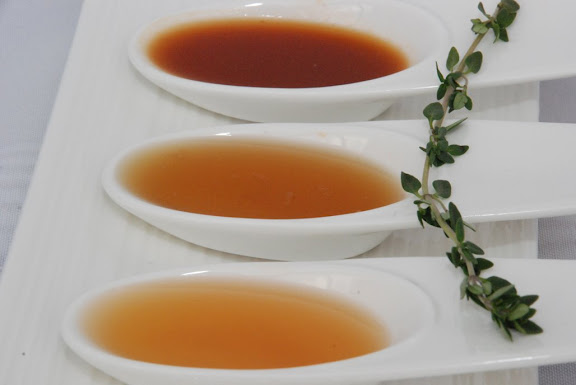
Veal stock 3 ways
Veal stock three ways

Remi and demi
In my reading up on stocks, I found a couple of other terms bandied about.

A remouillage (sometimes shortened to remi) is a portion of a previously made stock used as a starter for the new version of stock. Like a sourdough starter for bread, this is a starter for a stock that gives it a burst of flavor from your previous stock-making labor.

A demi-glace (often shortened to demi) is a stock that’s been reduced to a sauce, thick-like consistency. This reduced stock can be stored in ice cube trays, frozen, and stored in the freezer. A small amount of demi-glace can go a long way in boosting the flavor of a sauce.

Doing the Laundry
To follow the Thomas Keller way, check out his wonderful cookbook The French Laundry Cookbook (affiliate link) or go to a great blog called French Laundry at Home where there is a post about Veal Stock and follow along step-by-step.

Veal Stock Keller way mise en place
What’s that “bitter” celery doing there ‑ no celery allowed in TK’s veal stock!

Here is a great article to check out: Sweet, Sour, Salty, Bitter… and Umami an NPR article and podcast

"Good broth will resurrect the dead."
South American proverb

Recipe: Fond brun clair de veau (Basic recipe for brown stock)

from Le Cordon Bleu at Home (affiliate link)

Veal stock mise en place
Makes: 8 cups

6 pounds veal bones
2 pounds meaty veal knuckle
4 tablespoons tomato paste
24 cups water
3 medium carrots, chopped
3 onions, quartered
Salt
12 peppercorns
1 Bouquet Garni
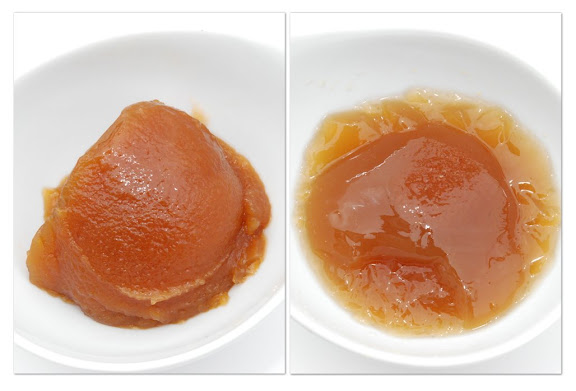
Veal stock gelled
Tasting Notes
Of all the brown stocks I tried, Thomas Keller’s version was by far the most gelatinous (see the photo on the left). It had a beautiful rosy, brown color and tasted delicious. My next favorite was the veal stock roasted with tomato sauce from the recipe above (see the photo on the right). It too gelled, although not as much, and tasted lighter and less tomato-y than Keller’s. These two will be stored in the freezer to be pulled out only for special occasions.

I also tried reducing the Keller version and the lightest version (beef stock not roasted) to a demi-glace. The Keller one became so gelled that I could form the gel into little balls. The beef stock remained liquid, but it improved its flavor slightly.

. . . . . . . . . .

Running total: $400.64 + $3.17 (I’m only counting 1 version of veal stock, not 5, and I’m counting the free one at that!) = $403.81

Butter used so far: 4 pounds, 28 tablespoons

More to Explore:



Friday, April 25, 2008

Fond blanc de volaille (Basic recipe for white stock)

"Which came first, the chicken or the egg?"

White stock is a combination of meat (either chicken, veal, or fish) covered with water and aromatics and simmered over gentle heat for a few hours. As mentioned in the Fish stock post, stocks are the “foundation of the kitchen”, or the fond de cuisine. Although they seem intimidating at first, they really are easy to make and require a bit of attention now and then, but the magic happens while it simmers.

Stocks are to cooking what foundations are to a house.
Auguste Escoffier


The path to a clear stock
The mark of a good stock is clarity. Here are some tips I learned during my reading up on stock.

Tips for rinsing, blanching, and simmering
• Rinse the bones under water before starting to remove impurities.
• Use cold water not hot water. Hot water makes the stock cloudy and murky.
• Some recipes call for blanching the meat or bones first (except for fish bones which are too fragile). Then drain and start with fresh, cold water. This removes any impurities on the outside. • After blanching and after the first boil, add ice. Do this before adding the vegetables. This will thicken the fat and make it easier to remove.
• After bringing the water to a boil, turn the heat down and simmer. Boiling moves the scum around making it impossible to remove. It also could make your stock greasy since the scum could emulsify (this time in a bad way) with the water.
• Don’t stir the stock or it might get cloudy and murky.
• When pouring the stock through a fine mesh strainer or chinois, ladle it instead of pouring it so that the impurities don’t get forced through the sieve by sheer force.
• After refrigerating overnight, the fat coagulates on the top making it easier to remove.

Tips for skimming
• Skim often (about every 10 minutes) to remove the scum or proteins as they rise to the surface. After awhile, there won’t be as much scum to remove.
• Add the vegetables (mirepoix) after the bones and water have come to a boil the second time so that it’s easier to remove the scum.
• Use a bouquet garni to hold all the aromatics and herbs so that you don’t skim them off with the scum. Slip the bouquet garni under a piece of meat so that it doesn’t get in the way of skimming.


Tips for flavoring
• Use the meat on the bones for extra flavor. However, to save money, just use the bones.
• Like the saying that you should never use wine you wouldn’t drink to flavor a dish, you shouldn’t add parts of vegetables that you wouldn’t eat (like carrot peels). I don’t think your stock should be like a compost bin.
• Cover the bones with water, just to cover. More water makes the stock less flavorful and diluted.
• After you’ve made the stock, you can reduce it by half for more flavor. This reduced stock can be stored in ice cube trays in the freezer.
• Keep some of the stock in a container in the freezer to start your next batch of stock. Similar to a sourdough starter, this method reinforces the base with extra flavor.

Tips for avoiding bacteria and storage
• When the stock is finished, you must cool the stock quickly to avoid bacteria growth. Bacteria love to grow between 40˚-145˚.
• To cool It quickly, pour a bunch of ice in a sink and put the bowl of strained stock on top. Stir to cool quickly.
• Another idea is to fill a freezer bag full of ice and drop it into the bowl of strained stock.
• Stock will keep in the refrigerator for 2-3 days. It will keep for several weeks in the refrigerator if you boil it every day. It freezes well, but thaw it and bring it to a boil before using.

Recipe for white stock

from Le Cordon Bleu at Home (affiliate link)


Makes: 8 cups

4-pound chicken
3 small onions
3 cloves
3 carrots
3 leeks
2 stalks celery
6 cloves garlic
4 large sprigs parsley (including stems)
2 branches thyme
1 bay leaf
10 peppercorns
1 teaspoon coarse salt
12 cups water

You can find the recipe in Le Cordon Bleu at Home (affiliate link).


Tasting Notes
This stock has a light, neutral taste. At $3 per cup, it’s more expensive than canned, but it’s worth it. I can’t wait to use it in a sauce or soup.

. . . . . . . . . .

Running total: $376.19 + $24.45 = $400.64

Butter used so far: 4 pounds, 28 tablespoons


Saturday, April 19, 2008

Filets de sole Dieppoise (Sole fillet served with a white wine sauce)


Sole Dieppoise is a dish from the port of Dieppe in northern France where sole is easier to find than here in Ottawa, it seems. I’ve been putting off working through this fish dish for some time now. However, now that I’ve made it I wish I hadn’t waited so long to give it a try. It’s delish!

Sole
Sole is a white, flat fish. The word “sole” comes from sandal since that’s what this fish looks like. The fish has two sides: the underside is a beautiful shimmering white, the upperside (with the eyes) is a camouflage pattern. However, I only know this from reading about it!

The fishmonger I went to didn’t have a whole sole (joking he only had half a soul left!) for me to practice filleting. He also didn’t have any sole fillets, so I ended up buying snapper fillets and a whole Red Snapper to try filleting. The snapper fillets were my backup knowing I wouldn’t be all that successful at creating an edible fillet on my first try.

I don’t have a picture of how my fillets turned out since they weren’t photogenic! I even watched a couple of videos beforehand to try to hone my skills, but I need more practice!

Watch a pro fillet a sole
Here's a great video showing how to fillet a flat fish.

Stock
The two main stocks in French cuisine are white (fond blanc) and brown (fond brun). The key difference between the two is that brown stock is browned in the oven first. Ingredients for white stocks are put in a stock pot with the liquid. The meat used in white stocks could be veal, chicken, or fish. For this dish, we’re using the fish stock (or fumet) made for the last class.

Velouté sauce
In the world of sauces, the first celebrity chef was Antonin Carême (1784-1833), known as the founder of classic French cookery, and is also known to have made Napoleon's wedding cake. Now there’s a catering job! Carême designated four classic sauces: Béchamel, Velouté (veh-loo-TAY), Espagnole, and Allemande.

Then along came Auguste Escoffier (1846-1935), a young, ambitious, whipper-snapper who updated the list of mother sauces to five: Béchamel, Velouté, Espagnole, Hollandaise, and Tomato. Since Allemande is derived from Velouté, it was replaced with Hollandaise and Tomato was added.

For this dish, a Velouté makes up the sauce, which is basically just a thickened stock.

Velouté = Roux blond + white stock (veal, chicken, or fish)
Roux blond = butter + flour (Flour and butter are cooked to a light color)


From a Velouté sauce, you can make a Sauce au vin Blanc (fish stock, wine, egg yolk, and cream), an Allemande sauce (veal stock, egg yolks, and cream) or a Suprême sauce (chicken stock, mushrooms, and cream).

Watch a pro make Velouté sauce
Here's a video showing how to make a Velouté sauce.

Fluted mushrooms
This dish is garnished with mushrooms that are preferably fluted, thank you very much. Well, I’ve never fluted a mushroom before, but I found some good information about how to do this fancy technique (after the fact). I thought my fluted mushrooms looked pretty good, and then I saw the ones in this link! I think I should now go out and buy 10 pounds of mushrooms to practice.

SaffronSaffron flavors the recipe I found for Filets de sole Dieppoise. I’ve always known it’s an expensive spice, but I didn’t know it comes from the stigmas in a small crocus (Crocus sativus). The three red stigmas in each crocus are hand-picked and dried. 14,000 stigmas equals 1 ounce, which equals about 5,000 crocuses. According to this link, it takes an acre of crocuses to produce 1 pound of saffron. Personally, I think saffron’s overrated. It tastes like hay, but it looks pretty. I guess it has that going for it!

Fennel
Fennel is the workhorse in this dish, providing the subtle hint of anise or licorice flavor.

Recipe for Filets de Sole Dieppoise
adapted from Link


Serves 2

2 sole fillets, 2 lb each
2 ounces shrimp
2 ounces button mushrooms, fluted
1 shallot, chopped
1 cup dry white wine
Juice from ½ a lemon
¼ cup cream
2 oz butter
2 oz flour
2 cups fish stock
Saffron
Fennel powder
Salt and freshly ground black pepper

Note: Some recipes for Filets de sole Dieppoise call for mussels for a garnish as well. I forgot to pick some up when I was at the fishmonger, so I left them out.

Fillet the sole.

Flute the mushrooms and cook on low heat for 10 minutes with the half the shallots, a touch of lemon juice, a bit of butter, and salt and pepper. Keep warm.

Peel the shrimp. Add the shrimp to the baking dish about half-way through the cooking time.

For the sole, sprinkle the bottom of a baking dish with the remaining half of the chopped shallots. Pour the white wine and ¼ cup of fish stock in the baking dish. Fold the sole fillets in half and put in the baking dish. Squeeze half a lemon over the fish. Cover with parchment paper, if desired. Put in oven for 5-8 minutes, until cooked through.

Meanwhile, melt the butter. Then add the flour and prepare the roux. Let it cook gently for five minutes until it’s a blond color. Add the stock, saffron, fennel, and shallots into the roux and let cook slowly five minutes. Remove from the heat and add the whipping cream. Add the saffron and ground fennel, to taste. Season to taste with salt and pepper. Strain the sauce through a fine sieve, if desired.

Tasting Notes
I wasn’t expecting this dish to be so tasty. I had procrastinated working on this dish, and didn’t really want to make it. But this was the most amazing fish and sauce combination I’ve had in a very long time. I thoroughly enjoyed it, even though the smell in the house was overpowering! I had leftover sauce and extra shrimp, so the next day I enjoyed shrimp with the Dieppoise sauce, which were excellent leftovers. The hint of licorice from the fennel was delicious. It was creamy, rich, subtle, and amazing.

. . . . . . . . . .

Running total: $354.37 + $21.82 = $376.19

Butter used so far: 4 pounds, 28 tablespoons

More to Explore:


Friday, April 18, 2008

Fumet de poisson (Fish stock)

In order to make the Filets de sole Dieppoise, which is next on my class list, I had to make the fish stock first. Fish stock is supposed to be made with white fish only. Do not use bones from fattier fish like trout, salmon, or mackerel.

Stocks are classified under fond de cuisine, which is the French word for stock. If translated literally, it means "foundation of the kitchen”. It is the liquid that comes out of simmering bones and meat with vegetables, herbs, and seasonings forming the basis of many sauces and soups. At its most basic, it is flavored water!

Stock to a cook is voice to a singer.
Anonymous

Broth, stock, and fumet
There are a few terms bandied about when talking about this liquid gold:
• A broth contains meat and bones and can be served as is.
• A stock contains bones and is used as an ingredient in other recipes.
• A fumet is usually referred to as a fish stock that has wine added to it.

Watch a pro
Here is a great videovideo showing how to make fish fumet.

Recipe for Fish stock


Makes about 4 cups

1 pound fish (white, preferably)
3 tablespoons unsalted butter
2 medium onions, chopped
4 shallots, chopped
2 leeks (white part only), chopped
1 Bouquet Garni
10 peppercorns
1½ cups dry white wine
3 cups water

You can use the heads of the fish, but clean the fish of the scales and gills. Chop into pieces.

Prepare the vegetables. Since there won't be time to extract all the flavor from big chunks of vegetables, chop them fairly small.

In a large stock pot, melt butter. Add the fish and the vegetables. Cook until vegetables are soft, about 2 minutes. Add the bouquet garni, peppercorns, and wine. Bring to a boil. Reduce the mixture by half. Stir in the water and bring to a boil. Skim off any froth. Lower the heat and simmer for about 20 minutes. Strain the stock through a fine-meshed sieve lined with a cheesecloth.

Tasting Notes
Fish stock is fishy. There’s not much else to say. After simmering fish for 20 minutes, the whole house smelled fishy so I simmered some cinnamon and cloves after I finished making this stock. But, the fish stock really was easy and enhanced the flavor of the sole immensely. It’s well worth the fish house smell!

. . . . . . . . . .

Running total: $338.43 + $15.94 = $354.37

Butter used so far: 4 pounds, 24 tablespoons

More to Explore:

