Showing posts with label Basics. Show all posts

Wednesday, July 2, 2008

Whisk Wednesdays—Sauce Mayonnaise (Basic emulsified sauce) and Salade Messidor (Summer Harvest Salad)

Mayonnaise
Mayonnaise is another emulsification sauce made with egg yolks, a bit of water, oil, and some flavorings. The egg yolks are the liaison (or emulsifier) that gets the oil and water to combine in mayonnaise. The mustard you use becomes the dominant flavor, so pick one you like.

2 rules
There are 2 main rules you need to know to make mayonnaise (or hollandaise or Béarnaise, for that matter):
• Have all ingredients at room temperature so that the emulsification can happen.
• Add the oil SLOWLY.

Fixing a Broken Mayonnaise
If the sauce breaks, try adding a bit of cold water. If that doesn’t work, try a new bowl with a bit of mustard or a fresh egg yolk in it. Then slowly add a bit of broken mayo into it and whisk. Continue adding the broken mayo slowly.

Watch a Pro
Alton Brown has a detailed post about mayonnaise. 

Links
Here is a great link to some history about mayonnaise, and here’s another one with more background about this sauce.

Recipe: Sauce Mayonnaise (Basic emulsified sauce) and Salade Messidor (Summer Harvest Salad)

Mayonnaise ingredientsHarvest Summer Salad ingredientsYou can find the recipe for Mayonnaise and Salade Messidor (Summer Harvest Salad)
in the book Le Cordon Bleu at Home (affiliate link). To see how the rest of the Whisk Wednesday group fared with this week's recipe, click here (or check out the sidebar) and then click on each blogger!

Mayonnaise keeps for about 3 days in the refrigerator.

Tasting Notes
We usually have Hellmann's® Mayo in the fridge and only use it on burgers and sandwiches, but now I know how to make homemade mayonnaise. It wasn't that hard; it just required a ton of whisking. As far as mayonnaise goes, I was happy with the taste. I'm not sure I'll make it again, however, but now I can check off that I've made it and can make it in the future, if need be.

Next Week (July 9)
• Billy Bi (Mussel Soup) page 311

. . . . . . . . . .

Running total: $455.89 + $1.20 (Mayonnaise) + $8.49 (Salad) = $465.58

Butter used so far: 6 pounds, 5 tablespoons

. . . . . . . . . .

More to Explore:


Wednesday, June 25, 2008

Whisk Wednesdays—Sauce Béarnaise (Warm emulsified sauce derived from Hollandaise sauce) with Steak

Béarnaise Sauce – A Classic French Culinary Delight
Béarnaise sauce

Now that we've completed the mother sauces, we're into the derivative ones and Béarnaise is one of the best. It's based on hollandaise but has an added flavor boost from a reduction of wine, shallots, wine vinegar, tarragon, and black peppercorns. Again, it’s an emulsification of eggs and butter, but with extra flavor from the herb and vinegar reduction. Traditionally, it’s served on beef, but it would be delicious on anything!

There are variations to the traditional recipe. Sometimes chervil, thyme, parsley, or bay is used as well as tarragon. Some use red wine vinegar or tarragon vinegar. Some recipes call for clarified butter and some for regular, room temperature butter. Some call for a blender while the more traditional recipes use just a whisk.

The last time I made Béarnaise was for the millennium celebrations in 1999. I remember using a blender and serving this sauce over tenderloin with shrimp and scallops on top as a garnish (à la The Keg). Pretty ritzy, eh? I haven’t made it since, but now it may be on our regular menu!

History
According to History of Sauces by Linda Stradley (What’s Cooking America), the sauce was created by Chef Jules Colette at his restaurant Le Pavillon Henri IV and served in the 1830s, but the sauce was named after Henri IV who was a gourmand born in Béarn, France and was King of France from 1589 to 1610.

"Don't be saucy with me Béarnaise..."
I had trouble when I made Béarnaise the first time. I added the clarified butter too fast, and it threw a tantrum and broke. I quickly consulted the cookbook, which told me to throw an ice cube into the mix to cool it off. This didn’t work. The next thing the cookbook suggested was to take a new pot, add a bit of cold water, and then add a ladle full of the sauce and whisk. Once that was smooth, add a bit more broken sauce to the fresh pot. Slowly, and ever patiently I whisked. And it worked! Thankfully, my eggs didn’t curdle so I was good to go. By this time, the T-bone steaks were ready, everyone was hungry, and I took a few casual photos and dug in. Later, looking at the photos, I realized I should have spent more time on the photo shoot!

A second Béarnaise sauce for lunch later in the week, no sauce tantrums (was I more patient or was it the room temperature butter?), more time with the photo shoot, and this time sauce spread leisurely over fried chicken, and again it was delicious!

I had some leftover Béarnaise sauce and attempted to re-heat it for supper. I put the burner on low, poured my leftover sauce into a clean pot, added 1 tablespoon of very hot water, and whisked like mad. Without stopping, I continued whisking, dipping my finger in for a heat-and-taste test, until the sauce was warm enough to drape over my leftover chicken. It worked, and it was delicious!

"A Béarnaise sauce is simply an egg yolk, a shallot,
a little tarragon vinegar, and butter,
but it takes years of practice for the result to be perfect."
–Fernand Point–
Who is Fernand Point?

"I believe Fernand Point is one of the last true gourmands
of the 20th century. His ruminations are extraordinary and thought-provoking. He has been an inspiration for legions of chefs.”

–Thomas Keller–
{On a side note, earlier this week I even made Eggs Benedict for one! It’s extremely dangerous to know how to whip this up on short notice given the amount of butter and the fact that it’s swimsuit season in these parts!}

Choking on Artichokes
On the artichoke front, I choked. This was the first time I’ve cooked artichokes! And I failed. First off, I had to get some tweezers to dig out the sliver of a prickle from one of the buggers. Then, I carefully de-leaved them until I thought I’d gotten to the light green center. After rubbing them lovingly with lemon, I plopped them into boiling water to cook. 30 minutes later, I took them out. I tried to dig out the middle to put the lovely un-broken Béarnaise sauce in, destroying 2 of the 3 chokes in the process. Then, when I finally sat down to eat, I daintily put one in my mouth and couldn’t chew it! Since artichokes are in the recipe for next week, I may try it again, but I need help.

Watch a Pro
Here’s a video showing how to make Béarnaise sauce. This video shows the solids from the reduction being strained and then thrown out, but the version in Le Cordon Bleu at Home keeps these in the sauce, which adds a nice texture to the sauce.

Links
12 Tips You Need To Make Perfect Bearnaise Sauce 
Béarnaise sauce
What is Béarnaise Sauce?

Recipe: Sauce Béarnaise (Warm emulsified sauce derived from Hollandaise sauce) with Steak

Béarnaise sauce mise en placeYou can find the recipe for Béarnaise sauce in the book Le Cordon Bleu at Home (affiliate link). You can also find a recipe for Salmon with Béarnaise sauce here. To see how the rest of the Whisk Wednesday group fared with this week's recipe, click here (or check out the sidebar) and then click on each blogger!

Béarnaise and steakTasting Notes
The hint of tarragon with its licorice taste, the sharpness of the shallots, and the creaminess of the eggs and butter make Béarnaise sauce the most amazing and delicious sauce yet! I was glad the sauce broke so that I could figure out how to fix it, and I was relieved that it worked. This is definitely a keeper and one I might even try serving for dinner guests, if I’m brave.

Next Week (July 2)
• Sauce Mayonnaise (Basic emulsified sauce) page 30-31
• Salade Messidor (Summer Harvest Salad)

. . . . . . . . . .

Running total: $446.39 + $5.15 (Béarnaise) + $4.35 (Artichokes) = $455.89

Butter used so far: 6 pounds, 5 tablespoons

. . . . . . . . . .

Next Week (July 2)
• Sauce Mayonnaise (Basic emulsified sauce) page 30-31
• Salade Messidor (Summer Harvest Salad)

Whisk Wednesdays:
If you would like to check out the other Whisk Wednesdays bloggers to see their take on Béarnaise sauce, click Kayte.


Wednesday, June 18, 2008

Whisk Wednesdays—Sauce Hollandaise (Warm emulsified sauce) and Sauce Moutarde

Whisk Wednesdays – Hollandaise Sauce & Eggs Benedict
::Whisk Wednesdays::
Welcome to Whisk Wednesdays!

Eggs Benedict with Hollandaise SauceHollandaise sauce
This week it's Hollandaise sauce, another of the five mother sauces. (Velouté, Espagnole, Béchamel, and Tomato are the others.) Hollandaise is similar to mayonnaise and lemon curd, but it's served warm.

Hollandaise is basically a sabayon, which is a foamy, emulsified mixture of yolks and liquid (in this case water). If you were to add sugar and a sweet wine, you would have zabaglione. But, today we're adding a ton (only half a pound) of butter to the sabayon.

History and Tips
Hollandaise dates back to the 17th century and used to be named Sauce Isigny, which is a town in Normandy famous for its butter. However, during World War I, France could no longer produce butter so they imported it from Holland and the name stuck. (from Linda Stradley at What's Cooking America)

Hollandaise is a tricky beast and requires constant attention, sorta like kids. You must whisk constantly to ensure the eggs don't stick to the bottom of the pan and to keep the texture smooth, not grainy.

There are different ways of making hollandaise: with a double boiler or directly over the flame. With clarified butter or with cubes of unsalted butter. With a blender or just a whisk.

Today, I tried putting the yolks directly over the flame (or burner, in my case!) and whisked constantly. I also made two batches: one using clarified butter and the other using butter cubes. The sauce with the clarified butter was runnier, plus I prefer the flavor from using the milk solids from good 'ol butter (and I'm not wasting any precious butter).

Earlier this year, I made lemon curd for a lemon cream tart and at the same time tried making a hollandaise sauce following the method suggested for Dorie's The Most Extraordinary French Lemon Cream Tart. It turned out great. This is yet another option for making hollandaise.

Hollandaise Trouble
Many things can go wrong with this sauce, but here are the tips I found to try to correct the problem.

• If curdled, blend in a blender although the texture won't be the same. You may just want to start over.

• If broken, try whisking in a little cream or water. The sauce may break if it becomes too hot. In this case cooling it off with cold water or an ice cube might do the trick.

• If too thick, add a little boiling water.

• If too thin, you may have added the butter too fast.

If you have the time (and an extra half pound of butter lying around), just start over! That's what I ended up doing after finding my first batch too runny. I put it back on the stove to reheat since it had been sitting out too long for the photo shoot(!), which quickly caused it to break into many pieces!

Watch a Pro
• Here is a great video showing how to make hollandaise.

• Here is another video with Alton Brown demonstrating hollandaise.

Links
I also found these cool links:

• Here's one that shows a picture of deep-fried hollandaise!

• Here's a good article with more background information about hollandaise.

Recipe: Hollandaise


Hollandaise sauce mise en placeYou can find the recipe for Hollandaise in the book Le Cordon Bleu at Home. To see how the rest of the group fared (all 3 of us!) with this week's recipe, click here and then click on each blogger!

Sauce Moutarde

Sauce MoutardeFor a variation, you can add Dijon mustard (or whatever mustard you want) to taste. This version tasted great on a ham roast we had. I also tried it on asparagus and the Eggs Benedict and loved it on these too.

Recipe: Eggs Benedict

Serves: 1

1 English Muffin, toasted
1-2 slices back bacon, cooked
1 poached egg
Hollandaise sauce
Freshly ground black pepper

Eggs Benedict with Hollandaise SauceSauce Moutarde on Asparagus and HamTasting Notes
Eggs Benedict always seemed so special when we went out for breakfast. Everyone else would order it, and I would order my French Toast. Now, though, I've discovered how much I love this heart-unfriendly breakfast fare and plan on making it more often. The hollandaise was rich and buttery, smooth and creamy, with a slight tang from the lemon. The hardest part of this dish is getting the poached egg properly poached (not too underdone and not too overdone). I still need practice on this front.

The mustard version was delicious too, perfect for a variation on Eggs Benedict or with ham and asparagus.

The best tip I learned was to use a thermos to store the Hollandaise sauce in until you're ready to serve. Brilliant, I tell you.

Next Week (June 25)
• Sauce Béarnaise (Warm emulsified sauce derived from Hollandaise sauce) on page 250

• Coeur de Filet Henri IV (Filet mignons with artichokes and Béarnaise sauce)

. . . . . . . . . .

Running total: $440.68 + $3.31 (Hollandaise) + $2.40 (Eggs Benedict) = $446.39

Butter used so far: 5 pounds, 29 tablespoons

. . . . . . . . . .

Check out the other posts for Whisk Wednesdays:

Grandma's Kitchen Table - Hollandaise Sauce and Moutarde Sauce
InsomniMom - Hollandaise and Sauce Moutarde

More to Explore:


Wednesday, June 11, 2008

Sauce Béchamel (White sauce): Crème, Mornay, and Soubise

BéchamelBéchamel (pronounced bay-shah-mel) is a thickened white sauce, also known as a milk sauce and is one of the five mother sauces. (Velouté, Espagnole, Hollandaise, and Tomato are the others.)

Although I make a mean homemade mac ‘n cheese, I didn’t know I was, in fact, making Béchamel as a starting point. I used to run home from school every day hoping we were getting macaroni and cheese for lunch and enjoying it while watching re-runs of Flintstones on TV. My daughters love homemade macaroni too, but I remember feeding it to my daughters and their friends, and their friends not finishing it because it wasn’t Kraft Dinner!

Some Notes about Béchamel
Béchamel is similar to velouté, but the liquid that’s added is milk, not stock.

If you don’t include the veal in the recipe, it’s known as Béchamel Maigre (which means lean Béchamel).

Although you don’t have to heat the milk first, doing so makes it easier to achieve a smooth sauce. Also, the sauce thickens faster since it doesn’t have to come up to temperature first. There is great debate about whether to add hot liquid to a cold roux or cold liquid to hot roux. I've done both, and as long as I've vigorously whisked it, I haven't had any lumps.

Steeping the milk with aromatics (such as thyme and bay) while you bring it to a boil enhances the flavor of the Béchamel.

The sauce should coat the back of a spoon, called nappe (pronounced nap), which means tablecloth in French.

History
Catherine de Medici's Tuscan cooks brought Béchamel to France from Italy in the 17th Century. The sauce was named after a courtier, Louis de Béchameil, marquis de Nointel (1630–1703) who was maitre d'hotel of the French King Louis XIV. (Wikipedia)

Watch a Pro
Click here to watch a pro make Béchamel.

Great articles
I found some great articles about Béchamel while researching this topic:
• A roux awakening by Peter Hertzmann
• History of Sauces by Linda Stradley at the website What's Cooking America
• Cream Sauces - Béchamel and Hollandaise by Jack Lang at the eGullet Society

Recipe: Béchamel

Béchamel mise en placefrom Rogov's Ramblings

Makes: about 2 cups

Ingredients:

5 tablespoons clarified butter
50 grams very lean veal, small dice (you could use ½ cup veal stock instead)
5 tablespoons flour
3 cups milk, brought to a boil before using
2 tablespoons onion, chopped
1 sprig thyme
¼ or ½ bay leaf
pinch of nutmeg
salt and white pepper

Instructions:

In a small frying pan, melt 1 tablespoon of the clarified butter and cook the veal slowly without allowing it to brown.

In a saucepan, add the remaining clarified butter and the flour. Cook over low heat, stirring constantly with a wooden spoon for 5 minutes to make a blond roux. Add the milk. Whisk until smooth. Then add the veal and remaining ingredients and simmer gently for 45 minutes to 1 hour. Strain through a cheesecloth.

If you aren’t using the sauce right away, dot a few bits of butter on the surface to prevent a skin from forming. Béchamel does not freeze well; it separates and thins.

Serve with fish, chicken, vegetables, eggs, or use it as a base for one of the following sauces. It’s nice served either hot or cold.

Crème, Mornay, and Soubise Sauce (White sauces derived from Béchamel)
Béchamel is a base for many classic sauces, including Crème, Mornay, and Soubise, which are compound sauces.

Crème, Mornay, and Soubise Sauce

Crème

from Rogov's Ramblings

1 cup Béchamel sauce
½ cup heavy cream
salt and pepper
touch of lemon juice

Bring the Béchamel to a simmer and add the cream a tablespoonful at a time. Keep at a simmer. Continue adding the cream, stirring constantly until the sauce is at the consistency you want. Season to taste with salt, pepper, and a bit of lemon juice.

Mornay

I learned about Mornay sauce for the Gnocci à la Parisienne. Click here to watch a pro make Mornay sauce.

from Rogov's Ramblings

1 cup Béchamel sauce
¼ to ½ cup Gruyère cheese or mix of Gruyère and Parmesan, grated
salt and pepper
paprika
1 tablespoon butter

Bring the Béchamel to a simmer and remove from the heat. Stir in ¼ to ½ cup of coarsely grated Gruyère cheese or a mixture of Gruyère and finely grated Parmesan cheese. Season to taste with salt, pepper, nutmeg and paprika. Remove from the heat and then stir in 1 tablespoon of butter.

Soubise

from everything2.com

1 cup Béchamel sauce
3 tablespoons butter
2 sweet yellow onions (½ lb)
1 clove garlic, finely chopped
salt and pepper

In a medium, heavy saucepan, melt the butter over low heat and add the onions and garlic. Sweat the onions on low heat for about 15 minutes, until they are translucent (not darkened), stirring often.

Bring the Béchamel to a simmer and add the onion mixture. Simmer for about 15 minutes. Check the consistency of the sauce. If it is thin, simmer gently until it thickens slightly. If it is too thick, add a little veal stock or milk.

Use a food processor or blender to process the sauce a bit, making sure to leave a bit of texture. You can also try rubbing the mixture through a sieve, pressing on it with a wooden spoon.

Return the soubise to a saucepan and gently reheat. Taste for seasoning.

The original recipe calls for a nip (30 mL) of pastis, Pernod, Ricard, or something similar, calling it optional, but divine.

Purple and Green Asparagus with BéchamelTasting Notes
I used the Béchamel sauce on purple and green asparagus, and it was delicious! The subtle hint of nutmeg, thyme, and bay made this sauce a perfect pairing with the crunchy asparagus tips. I also made the Crème and Soubise but not the Mornay since I'd done that earlier on this blog. The Soubise with a nip of Ouzo (dusted off from a trip to Greece ages ago) was amazing. I could have eaten the Soubise all on its own. The Crème was not much different from the basic Béchamel, which is understandable. I could almost taste the macaroni in it. For dinner, I fried up some mushrooms and added the Crème sauce. Poured over chicken, it tasted amazing.

. . . . . . . . . .

Running total: $436.91 + $3.77 = $440.68

Butter used so far: 5 pounds, 13 tablespoons

More to Explore:


Wednesday, June 4, 2008

Sauce Espagnole and Demi-glace (Basic brown sauces)

Demi-glaceI always thought demi-glace (pronounced DEHM-ee glahs) was stock reduced by half. If only it were that simple and "basic" as the title suggests!

A simple stock reduction refers to glace de viande (pronounced glahs duh vee-AHND). Traditional demi-glace is much more involved, literally means half glaze, and requires even more hours in the kitchen babysitting stock. It is half stock and half Espagnole (pronounced ehs-pah-NYOHL) sauce that are then reduced by half. This traditional method is a little passé according to an article on StyleForum, which suggests that reductions are hot and roux is not. But some believe that the time spent on making demi-glace the traditional way using both brown stock and Espagnole sauce is well worth it.

Espagnole Sauce
So, what is Espagnole sauce? Espagnole sauce is the most basic brown stock in French cuisine, has the distinction of being one of the five mother sauces, and has a Spanish name. You can credit the Spanish cooks at Louis XIII’s wedding who added Spanish tomatoes to the brown sauce and everyone loved it. I'm sure these cooks would have given the Iron Chefs a run for their money with their Spanish tomatoes!

Espagnole sauce is made with brown roux and brown stock. Bacon, the usual aromatics (onions, celery, carrots, a Bouquet garni), and tomatoes are added. Also, Madeira or sherry is sometimes added, although the recipe I used didn’t call for it.

Process for Demi-glace
So, here’s the process to make classical demi-glace:

1. Make brown stock.
2. Make Espagnole sauce.
3. Make demi-glace.

Since I have a freezer full of stock, I just had to prepare the Espagnole sauce to get to step 3.

Thomas Keller’s Veal Stock (affiliate link) and Demi-glace

Thomas Keller's Veal Stock vs Demi-glaceWhen I made veal stock, I made several versions. To make the demi-glace, I used one of the veal stocks that I roasted with tomato sauce. As I was working through this recipe, it occurred to me that Thomas Keller’s veal stock (affiliate link) involved a similar 2-step plus reduction process. His doesn't have a whiff of flour in it nor does it have bacon, but other than that I wonder if you might be able to classify it as demi-glace.

So, you can try the following three ways to get yourself to demi-glace status:

• You can reduce veal stock. This is more common these days since roux is passé and reductions save time in the kitchen. But, for the purist, this is not the path to flavor nirvana.

• You can follow the Keller way, which is to make a "veal stock #1", and then make a "veal stock #2". Then you can reduce that down to make a demi. (Keller’s stock has a more tomato-y flavor, and if you want the smoky flavor that an Espagnole sauce has, you could add the bacon in the last step.)

• You can follow the traditional method and make a stock, make an Espagnole sauce, and then make a demi.

Recipe: Espagnole Sauce


Espagnole Sauce mise en placeAdapted from La Varenne Pratique (affiliate link)

Makes: 1½ cups

Ingredients:

3 tablespoons butter
¼ cup flour
4 cups brown stock
2 ounces bacon, diced
½ onion, diced
½ carrot, diced
1/8 cup tomato purée
1 Bouquet Garni
Salt and pepper

Instructions:

Heat the butter in a heavy saucepan. Add the bacon and sauté for 2-4 minutes. Add the onion and carrot and sauté until soft. Add the flour and cook gently until the mixture is a dark brown, about 5 minutes.

Meanwhile, bring the brown stock to a boil. Cool the vegetable mixture slightly and then whisk in ¾ of the stock. Bring to a boil, whisking until the mixture thickens.

Add the Bouquet Garni and tomato purée. Simmer gently uncovered for 3-4 hours. Skim and stir occasionally. Add the remaining stock gradually during cooking, skimming as you do.

When the sauce has reduced by half, strain. Season to taste.

Tip for checking if your mixture is reduced by half:
Use a ruler.
Stick it in the pot when all the liquid is in and note where the liquid comes to on the ruler. Then, mark on the ruler with a pen the halfway point. While it reduces, stick the ruler in to check to see if it's reached the half-way mark.

Recipe: Demi-Glace

Ingredients:

1 cup brown stock
1 cup Espagnole sauce
1 Bouquet Garni
salt and pepper

Instructions:

n a heavy stock pot, combine the Espagnole sauce, brown stock, and 
Bouquet Garni over medium-high heat until the mixture is reduced by half, about 1½ hours. Skim occasionally. Season with salt and pepper. Strain.

Demi-glaceTasting Notes
This is an involved process, but definitely worth it. It takes a day to make the stock, another half day to make the Espagnole sauce and the demi-glace. The sauce I made with this demi-glace was amazing. I sautéed some mushrooms, poured in a ladle-full of demi-glace and “easy” as that, I had a rich, velvety, delicious sauce that was out of this world.

. . . . . . . . . .

Running total: $434.84 + $2.07= $436.91

Butter used so far: 5 pounds, 5 tablespoons
. . . . . . . . . .

More to Explore:


Saturday, May 3, 2008

Fond brun clair de veau (Basic recipe for brown stock)

Beef and Veal Stock: The Ultimate Guide
Beef and Veal StockStock, stock, and more stock. My refrigerator is overflowing with all sorts of stock. White stock from last week’s post, and this week I have a fridge full of variations on a brown stock theme.

Brown stock. Who knew how complicated this topic would be. First, there’s the issue of beef versus veal, which led to research about collagen, which led to research about umami. Then, there’s the question about whether to roast the meat beforehand or not, which introduces the differences between carmelization and the Maillard reaction. All brown stock is supposed to be roasted, isn’t it? Yet, I found some veal stocks that were presented more like white stocks, namely from that inventive, amazing chef named Thomas Keller (Best California Chef in 1996 and the Best Chef in America in 1997, famous for his restaurant The French Laundry). It was a little overwhelming for what seemed at first to be a simple topic.

“You can’t have a good sauce if you start with a bad stock.”
The French Laundry Cookbook

To begin, I raided several butcheries of their treasured veal bones, or tried to. One butchery didn’t have any, another wasn’t willing to sell theirs, another charged me an arm and a leg for a bag o’ bones, and finally – jackpot – one gave me a bag for free. I’ll definitely be spending more time and money at that butchery in the future! And so, I made stock. In many variations. Beef, veal, roasted, not roasted, roasted with tomato paste, roasted without tomato paste, and finally the labor-intensive Thomas Keller way.

Brown stock 5 ways
Click for larger image

Now I have 40+ cups of stock to freeze and use up in the coming weeks, months, years! And some that I will only use as a sauce base for the best cuts of meat, like pulling out a prized bottle of wine from a cellar.


“Indeed, stock is everything in cooking. Without it, nothing can be done. If one’s stock is good, what remains of the work is easy; if, on the other hand, it is bad or merely mediocre, it is quite hopeless to expect anything approaching a satisfactory meal.”
Auguste Escoffier in Guide Culinaire (1903)


Bovine collagen
You can make brown stock from chicken, beef, or veal. Since I tried chicken stock last week, I wanted to try brown stock made with beef and veal.

As I learned last week, stock is the most important flavor carrier for soups and sauces. But I didn’t know that the magic ingredient in stock is collagen.


Collagen is a protein in animals that connects and supports bodily tissues, such as skin, bone, tendons, muscles, and cartilage. While the collagen from the bones cooks, it dissolves into gelatin, picks up the flavors from the bones and aromatic vegetables, and transfers them into the stock. As the stock simmers, it’s collecting healthy minerals from the bones like calcium, magnesium, phosphorus, silicon, sulphur, and trace minerals. Good stock builds strong bones, relieves sore throats, and helps the sick. The resulting gelatin is the ‘glue’ that combines all the flavors and gives body to the soup or sauce.

More collagen is found in a younger animal. As an animal gets older, it makes less collagen. Also, more collagen is in the knuckles and joints of these animals. Finally, more collagen is found in veal than in beef. So, at the butchery, ask for the knuckles and joints of a young veal (if you can get over the morality of it all, that is, and your butcher is willing to part with this soon to be liquid gold).

Veal stock‑a magic elixir
So, one reason veal stock is a miraculous substance is due to the extra collagen you get from the bones. Now, what is it about all this collagen that makes it so desirable in stock? Why do we want it to wibble and wabble like Jell-O after simmering it all day? One reason is that this gelatin naturally and easily thickens and enriches the soup or sauce in which the stock is used, providing richness and mouthfeel. It’s all about taste.

“Auguste Escoffier invented veal stock.” So begins Jonah Lehrer’s essay on “The Essence of Taste” in his book called Proust Was a Neuroscientist. Escoffier (1846-1935) was a young, ambitious, celebrated chef of his time. He was concerned about how things tasted, and less about how it looked. He believed that “What it actually tastes like is the only thing that matters.”

Michael Ruhlman, a food journalist extraordinaire, writes this about veal stock:

a natural wonder
a great work of art
the backbone of the finest culinary tradition
the most powerful tool in professional kitchens

These declarations about veal stock come from an interesting essay Ruhlman wrote called “Veal Stock‑a personal reflection on the home cook’s most valuable ingredient” in his book The Elements of Cooking. I found an excerpt here, but it’s worth it to buy his book and read the whole essay. He expounds on the importance of veal stock and how it’s the forgotten ingredient in this age of convenience where it’s quicker to buy a container of 4 cups of beef broth for $3 than make it yourself. But look at this mouthfeel (and it’s not veal broth):

Another reason why homemade veal stock is so much better than beef stock is its neutrality, depth of flavor, and its silky, velvety texture. Plus, it has no added MSG, like most store-bought broth. Just natural, home-brewed umami. Umami? The fifth sense. It’s not bitter, not sour, not salty, nor sweet. It’s “delicious,” yummy even. This is the definition of umami. In geeky terms, it is glutamic acid.
from Wikipedia

This glutamic acid can be tasted in asian fish sauce, corn, miso, mushrooms, aged Parmesan, prosciutto, shellfish, smoked or cured fish, soy sauce, vine-ripened tomatoes, and of course veal stock. It’s the “je ne sais quoi” of flavors.

Adding more flavor
Now that we’ve determined veal stock is the way to go, there’s the bone preparation to consider. In general, the key difference between brown and white stock is that the bones for brown stock are browned in the oven first. However, just to confuse the issue a bit, some brown stocks are not roasted first. In fact, Thomas Keller doesn’t roast the bones first. He suggests roasting adds impurities to the stock.

Another flavor enhancer is tomato paste, which most brown stocks include. This is for flavor, color, and to help break down the collagen. It adds a depth of flavor and rich mouthfeel to the stock. Stock made without tomato paste makes the stock a lighter, more neutral color, which may desirable in some sauces. The acid in tomatoes breaks down the connective tissues on the bones. Thomas Keller’s veal stock includes fresh tomatoes as well.

Finally, another way to add flavor to the stock is to roast the vegetables to carmelize them, technically called the Maillard reaction. This reaction turns the sugars in the vegetables brown and sweet. I didn’t try this step. However, after I’ve used up all the stock in my fridge and freezer, I’ll have to experiment with this variation too. Maybe.
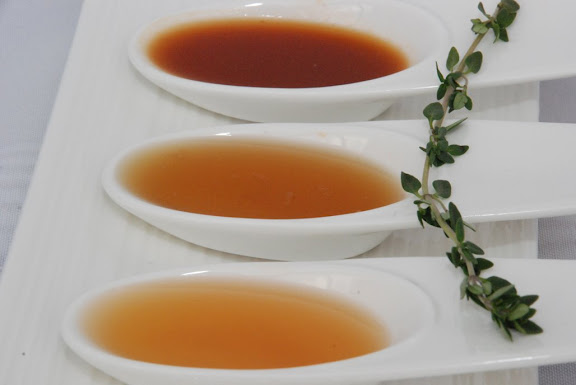
Veal stock 3 ways
Veal stock three ways

Remi and demi
In my reading up on stocks, I found a couple of other terms bandied about.

A remouillage (sometimes shortened to remi) is a portion of a previously made stock used as a starter for the new version of stock. Like a sourdough starter for bread, this is a starter for a stock that gives it a burst of flavor from your previous stock-making labor.

A demi-glace (often shortened to demi) is a stock that’s been reduced to a sauce, thick-like consistency. This reduced stock can be stored in ice cube trays, frozen, and stored in the freezer. A small amount of demi-glace can go a long way in boosting the flavor of a sauce.

Doing the Laundry
To follow the Thomas Keller way, check out his wonderful cookbook The French Laundry Cookbook (affiliate link) or go to a great blog called French Laundry at Home where there is a post about Veal Stock and follow along step-by-step.

Veal Stock Keller way mise en place
What’s that “bitter” celery doing there ‑ no celery allowed in TK’s veal stock!

Here is a great article to check out: Sweet, Sour, Salty, Bitter… and Umami an NPR article and podcast

"Good broth will resurrect the dead."
South American proverb

Recipe: Fond brun clair de veau (Basic recipe for brown stock)

from Le Cordon Bleu at Home (affiliate link)

Veal stock mise en place
Makes: 8 cups

6 pounds veal bones
2 pounds meaty veal knuckle
4 tablespoons tomato paste
24 cups water
3 medium carrots, chopped
3 onions, quartered
Salt
12 peppercorns
1 Bouquet Garni
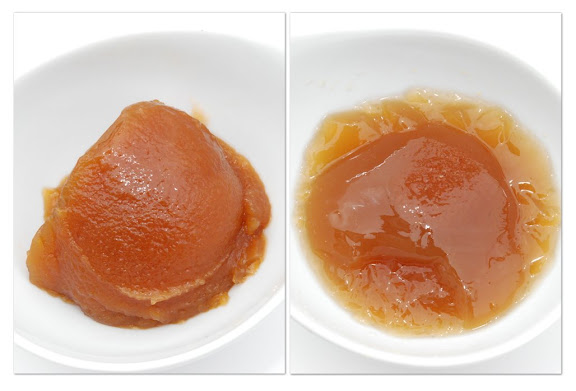
Veal stock gelled
Tasting Notes
Of all the brown stocks I tried, Thomas Keller’s version was by far the most gelatinous (see the photo on the left). It had a beautiful rosy, brown color and tasted delicious. My next favorite was the veal stock roasted with tomato sauce from the recipe above (see the photo on the right). It too gelled, although not as much, and tasted lighter and less tomato-y than Keller’s. These two will be stored in the freezer to be pulled out only for special occasions.

I also tried reducing the Keller version and the lightest version (beef stock not roasted) to a demi-glace. The Keller one became so gelled that I could form the gel into little balls. The beef stock remained liquid, but it improved its flavor slightly.

. . . . . . . . . .

Running total: $400.64 + $3.17 (I’m only counting 1 version of veal stock, not 5, and I’m counting the free one at that!) = $403.81

Butter used so far: 4 pounds, 28 tablespoons

More to Explore:



Friday, April 25, 2008

Fond blanc de volaille (Basic recipe for white stock)

"Which came first, the chicken or the egg?"

White stock is a combination of meat (either chicken, veal, or fish) covered with water and aromatics and simmered over gentle heat for a few hours. As mentioned in the Fish stock post, stocks are the “foundation of the kitchen”, or the fond de cuisine. Although they seem intimidating at first, they really are easy to make and require a bit of attention now and then, but the magic happens while it simmers.

Stocks are to cooking what foundations are to a house.
Auguste Escoffier


The path to a clear stock
The mark of a good stock is clarity. Here are some tips I learned during my reading up on stock.

Tips for rinsing, blanching, and simmering
• Rinse the bones under water before starting to remove impurities.
• Use cold water not hot water. Hot water makes the stock cloudy and murky.
• Some recipes call for blanching the meat or bones first (except for fish bones which are too fragile). Then drain and start with fresh, cold water. This removes any impurities on the outside. • After blanching and after the first boil, add ice. Do this before adding the vegetables. This will thicken the fat and make it easier to remove.
• After bringing the water to a boil, turn the heat down and simmer. Boiling moves the scum around making it impossible to remove. It also could make your stock greasy since the scum could emulsify (this time in a bad way) with the water.
• Don’t stir the stock or it might get cloudy and murky.
• When pouring the stock through a fine mesh strainer or chinois, ladle it instead of pouring it so that the impurities don’t get forced through the sieve by sheer force.
• After refrigerating overnight, the fat coagulates on the top making it easier to remove.

Tips for skimming
• Skim often (about every 10 minutes) to remove the scum or proteins as they rise to the surface. After awhile, there won’t be as much scum to remove.
• Add the vegetables (mirepoix) after the bones and water have come to a boil the second time so that it’s easier to remove the scum.
• Use a bouquet garni to hold all the aromatics and herbs so that you don’t skim them off with the scum. Slip the bouquet garni under a piece of meat so that it doesn’t get in the way of skimming.


Tips for flavoring
• Use the meat on the bones for extra flavor. However, to save money, just use the bones.
• Like the saying that you should never use wine you wouldn’t drink to flavor a dish, you shouldn’t add parts of vegetables that you wouldn’t eat (like carrot peels). I don’t think your stock should be like a compost bin.
• Cover the bones with water, just to cover. More water makes the stock less flavorful and diluted.
• After you’ve made the stock, you can reduce it by half for more flavor. This reduced stock can be stored in ice cube trays in the freezer.
• Keep some of the stock in a container in the freezer to start your next batch of stock. Similar to a sourdough starter, this method reinforces the base with extra flavor.

Tips for avoiding bacteria and storage
• When the stock is finished, you must cool the stock quickly to avoid bacteria growth. Bacteria love to grow between 40˚-145˚.
• To cool It quickly, pour a bunch of ice in a sink and put the bowl of strained stock on top. Stir to cool quickly.
• Another idea is to fill a freezer bag full of ice and drop it into the bowl of strained stock.
• Stock will keep in the refrigerator for 2-3 days. It will keep for several weeks in the refrigerator if you boil it every day. It freezes well, but thaw it and bring it to a boil before using.

Recipe for white stock

from Le Cordon Bleu at Home (affiliate link)


Makes: 8 cups

4-pound chicken
3 small onions
3 cloves
3 carrots
3 leeks
2 stalks celery
6 cloves garlic
4 large sprigs parsley (including stems)
2 branches thyme
1 bay leaf
10 peppercorns
1 teaspoon coarse salt
12 cups water

You can find the recipe in Le Cordon Bleu at Home (affiliate link).


Tasting Notes
This stock has a light, neutral taste. At $3 per cup, it’s more expensive than canned, but it’s worth it. I can’t wait to use it in a sauce or soup.

. . . . . . . . . .

Running total: $376.19 + $24.45 = $400.64

Butter used so far: 4 pounds, 28 tablespoons


Friday, April 18, 2008

Fumet de poisson (Fish stock)

In order to make the Filets de sole Dieppoise, which is next on my class list, I had to make the fish stock first. Fish stock is supposed to be made with white fish only. Do not use bones from fattier fish like trout, salmon, or mackerel.

Stocks are classified under fond de cuisine, which is the French word for stock. If translated literally, it means "foundation of the kitchen”. It is the liquid that comes out of simmering bones and meat with vegetables, herbs, and seasonings forming the basis of many sauces and soups. At its most basic, it is flavored water!

Stock to a cook is voice to a singer.
Anonymous

Broth, stock, and fumet
There are a few terms bandied about when talking about this liquid gold:
• A broth contains meat and bones and can be served as is.
• A stock contains bones and is used as an ingredient in other recipes.
• A fumet is usually referred to as a fish stock that has wine added to it.

Watch a pro
Here is a great videovideo showing how to make fish fumet.

Recipe for Fish stock


Makes about 4 cups

1 pound fish (white, preferably)
3 tablespoons unsalted butter
2 medium onions, chopped
4 shallots, chopped
2 leeks (white part only), chopped
1 Bouquet Garni
10 peppercorns
1½ cups dry white wine
3 cups water

You can use the heads of the fish, but clean the fish of the scales and gills. Chop into pieces.

Prepare the vegetables. Since there won't be time to extract all the flavor from big chunks of vegetables, chop them fairly small.

In a large stock pot, melt butter. Add the fish and the vegetables. Cook until vegetables are soft, about 2 minutes. Add the bouquet garni, peppercorns, and wine. Bring to a boil. Reduce the mixture by half. Stir in the water and bring to a boil. Skim off any froth. Lower the heat and simmer for about 20 minutes. Strain the stock through a fine-meshed sieve lined with a cheesecloth.

Tasting Notes
Fish stock is fishy. There’s not much else to say. After simmering fish for 20 minutes, the whole house smelled fishy so I simmered some cinnamon and cloves after I finished making this stock. But, the fish stock really was easy and enhanced the flavor of the sole immensely. It’s well worth the fish house smell!

. . . . . . . . . .

Running total: $338.43 + $15.94 = $354.37

Butter used so far: 4 pounds, 24 tablespoons

More to Explore:


Sunday, January 13, 2008

Potage cultivateur (Cut vegetable soup) Part 1

There are three important concepts and skills that are always mentioned when starting out in the culinary world:

* Mise en place
* Mirepoix
* Knife skills and different kinds of cuts

Mise en place (meez-on-plahs) means “set in place”, getting everything for a recipe ready beforehand, including preparing any vegetables, measuring out liquids and dry ingredients, and assembling the equipment you will need.

Mirepoix (MEER-pwah) is a basic flavouring for soups and stews according to Le Cordon Bleu Complete Cooking Techniques (affiliate link) comprised of a coarsely diced mixture of onions (or leeks), carrots, and celery. Roughly half the mixture is onions, a quarter is carrots, and another quarter is celery.

Mirepoix
A knife is the most important tool in the kitchen, and therefore knife skills are one of the most important skills a chef can learn. With proper technique, accomplished chefs can quickly cut through mounds of vegetables quickly and efficiently. That’s not me! I’m still learning. I have been enjoying learning from the latest handbook about knives called Knife Skills Illustrated (affiliate link) by Peter Hertzmann. Here is a list of the different types of cuts, their sizes, and a picture:

Large dice
¾ inch cube
2cm cube Medium dice
½ inch cube
1cm cube Small dice
¼ inch cube
6mm cube Brunoise (BREWN-wahz)
between 3/16 and ⅛ inch cube
2-3mm cube Fine Brunoise
finely diced cube
1/16 inch cube
1.5mm cubePaysanne (PAHY-sahn)
flat square or triangle
½ inch by ½ inch by ¼ inch
1.2cm by 1.2cm by 6mm
To cut a paysanne, take one of the dices and cut it in half.

Bâtonnet (BAH-toh-nah)
matchstick shape
¼ inch by ¼ inch by 2-2½ inches
6mm by 6mm by 5-6cm

Julienne (JU-lee-en)
long, thin sticks, sometimes called matchsticks
⅛ inch by ⅛ inch by 1-2 inches
3mm by 3mm by 2.5-5cm

More to Explore:


Thursday, January 10, 2008

Clarified Butter

Clarified ButterClarified butter means the milk solids and water have been removed from the butter. It is also known as “drawn butter”.

Here are some pros and cons of using clarified butter:

• It keeps longer because it doesn’t have the milk in it to go rancid.
• It has a higher smoke point.
• It has a buttery taste that oils don’t have.
• It doesn’t have the rich flavor of regular unsalted butter.

Use unsalted butter and melt it slowly in a saucepan over low heat. Don’t stir. Let it sit so that the milk solids and water separate from the butter fat. Skim the foam from the surface. Remove from the heat and let stand a few minutes until the milk solids settle to the bottom. Carefully pour the clear yellow liquid (the clarified butter) into a container, leaving the milk solids in the bottom of the saucepan; discard the solids.

A stick (8 tablespoons) of butter will make about 6 tablespoons of clarified butter. It keeps in the refrigerator for several months.

