Tuesday, May 20, 2008

Tuesdays with Dorie—Madeleines

Madeleines à la ProustFrom a Florida state pie to a cookie that could be France’s national cookie, we’re globetrotting with Tuesdays with Dorie. A Madeleine is a cake-like cookie that can be flavored with almost anything, shaped like a shell, has a definitive bump, and was made famous by Proust.

I had never tasted Madeleines before, but I definitely ate a lifetime’s worth after they came out of the oven! I even made some tea to dip my famous Madeleine in, and oh, how delicious. My memories of those Madeleines will last a lifetime.

History
So much has been written about Proust and the history of the Madeleine. I don’t want to repeat it all here, but I’ll send you to some of the best links I found on the subject:
• An article in search of the original Proustian Madeleine recipe
• A bit of history about Madeleines
• A famous food blogger blogs about Madeleines
• An interesting podcast with Jonah Lehrer about his book Proust Was a Neuroscientist

Mishaps
I decided to try making both the Earl Grey Madeleines and the Traditional Madeleines for comparison. Since I’m new to this Madeleine world, I needed the traditional as a baseline of what a true Madeleine is. But the Earl Grey ones sounded too delicious to pass up.

Things didn’t go smoothly for my first batch of Earl Grey Madeleines. At first, things were going along swimmingly. I had steeped the tea leaves in the butter, as the recipe says. I prepared the dry ingredients, mixed up the sugar, zest, and eggs, and vanilla. Then, I carefully added the dry ingredients. Finally, I added the butter steeped with tea leaves, BUT I forgot to strain the tea leaves! I didn’t feel confident that so many tea leaves would be pleasant to eat, so I had to start over.

The second time, I questioned whether I had enough melted butter after straining the tea leaves. I only had about 2 tablespoons of butter and the recipe called for 5, so 3 tablespoons were attached to the tea leaves. I went ahead with the recipe, and they thankfully turned out. I maybe should have left mine in the oven longer to get the beautiful brown hue, but they tasted fine and were cooked through.

Variations
Earlier in the week, I’d made some Lemon Cream for the Sugar High Fridays event, and Madeleines dipped in Lemon Cream were delicious.

Also, Nutella or Dulce de Leche sandwiched between two traditional Madeleines is a treat too.

Pound Cake versus Madeleines
In my reading, I found out that pound cake ingredients are a lot like Madeleines. I have a tried and true recipe for lemon pound cake that I love to make. Comparing the two recipes, the pound cake has ¼ cup more sugar, ¾ tablespoons more butter, and 2 tablespoons each of milk and lemon juice. I tried making this pound cake recipe as Madeleines, including chilling the batter for 3 hours.
Lemon pound cake à la madeleinesFor the most part, they worked. They overflowed and exploded a bit in the oven, some had holes in them, but some looked good, and they were tasty. The recipe is more lemony and sweeter than the traditional Madeleines. They had more of a crunch around the edges too. The pound cake also has a lemon glaze which would be nice on the Madeleines. If I were doing this again, I would use lemon zest instead of juice and reduce the amount of milk to eliminate the oven cleaning required (or put the Madeleine pan on a baking sheet-duh!). I can see getting more use out of my newly purchased Madeleine pan by trying different recipes like this with it.

Recipe: Madeleines

Mini MadeleinesYou can find the recipe for Madeleines at Tara's blog called Smells Like Home or in the book Baking: From My Home to Yours (affiliate link) by Dorie Greenspan. To see how the rest of the TWD group fared with this week's recipe, click here and then click on each blogger!

MadeleinesTasting Notes
These cake-like cookies are going to be a favorite around here, I can tell. I left the bowl of Madeleines out with the icing sugar sprinkler next to it, and in no time, the Madeleines disappeared. I’ve read you can refresh them in the oven, but who has time for that!

I enjoyed the Earl Grey ones more and my daughter enjoyed the traditional ones more, so we were a good team. I hope she has fond memories of Madeleines when she’s older, and I plan on making these often. I’m looking forward to trying the chocolate and marshmallow fluff versions in Dorie’s cookbook someday.

Recipe for Next Week (May 27)
Pecan Honey Sticky Buns on pages 51-53 chosen by Madam Chow of Madam Chow’s Kitchen.

More to Explore:


Sunday, May 18, 2008

Sugar High Friday (SHF) #43 Citrus: Pecan Coconut Pavlova with Lemon Cream

Pecan Coconut Pavlova with Lemon CreamCitrus. Crunch. Coconut. Pecans. Cream. These are some of my favorite flavors combined into one dessert.

For the crunch part of this dessert, I baked a meringue mixture filled with toasted coconut and toasted, ground pecans and baked it like a pavlova. I’m lucky I had enough meringue to bake since I kept sneaking some taste tests. I’d made this coconut meringue another time, but this time added pecans for extra crunch and nuttiness.

For the citrus part of this dessert, I made some lemon curd and folded it into flavored whipping cream. One of my favorite desserts is lemon meringue pie, and instead of the meringue on top, it’s on the bottom in this one.

This is for Sugar High Friday #43 (started by Jennifer of The Domestic Goddess), which is being hosted by Helen of Tartlette this month.

Recipe: Citrus: Pecan Coconut Pavlova with Lemon Cream

Ingredients:

For the Pavlova
1½ cups sweetened flaked coconut, toasted
6 large egg whites
1½ teaspoons cornstarch
1 teaspoon vinegar
½ teaspoon vanilla
¼ teaspoon salt
1½ cups sugar
¼ cup boiling water
4½ ounces (¾ cup) hazelnuts, browned and ground

For the Lemon Cream
2 large eggs
2 large egg yolks
6 tablespoons unsalted butter
1 cup sugar
6 tablespoons fresh lemon juice
2 teaspoons lemon zest
Pinch of salt
1 cup whipping cream
3 tablespoons icing sugar
1 teaspoon vanilla

Instructions:

For Pavlova
Position a rack in the center of the oven and preheat it to 350°F. Spread 1 cup coconut on large baking sheet. Spread hazelnuts on another baking sheet. Toast until golden, stirring twice, about 15 minutes. Cool. Maintain oven temperature. Ground the hazelnuts in a blender or food processor.

Line another large baking sheet with foil. Whisk egg whites, cornstarch, vinegar, vanilla, and salt in large bowl until foamy. Gradually add sugar and beat until stiff peaks form. Beat in boiling water slowly (so the eggs don’t curdle), beating until whites are stiff and glossy. Fold in toasted coconut and hazelnuts. Spoon meringue onto center of prepared baking sheet and spread to 9-inch-diameter circle (or several smaller ones) with slightly raised edges. Sprinkle with ½ cup untoasted coconut.

Bake meringue 10 minutes. Reduce oven temperature to 200°F and bake until dry and crisp outside and just cooked through inside, about 1 hour. Turn off oven. Let meringue stand in oven 1 hour. Remove from oven and cool completely.

For Lemon Cream
In a bowl, whisk eggs and egg yolks. Melt butter on the top of a double boiler. Whisk in sugar, lemon juice, lemon zest, and salt. Slowly whisk in egg mixture. Whisk until thick and thermometer inserted into mixture registers 178°F to 180°F, about 8 minutes. Transfer to small bowl. Press plastic wrap on top and chill 4 hours. You can make this 2 days ahead and keep it chilled.

In a chilled bowl, whip the cream with the icing sugar and vanilla. Fold the chilled lemon mixture into the whipping cream.

To Assemble
Place the meringue on the bottom. Top with lemon cream. Optionally, place another meringue on top. Dust with icing sugar.

Pecan Coconut Pavlova with Lemon Cream
Have a citrus-y sugar high on me!

More to Explore:


Saturday, May 17, 2008

Poulet poché sauce Suprême (Whole poached chicken served with a white creamy sauce)

Poulet poché Sauce Suprême (Whole Poached Chicken with White Creamy Sauce) Poulet poché sauce Suprême (Whole poached chicken served with a white creamy sauce)Sauce suprême. Sounds hard. It’s not. It’s basically a velouté with cream. I already learned about velouté when I made Sole Dieppoise. All I needed now was cream.
Sauce SuprêmeAfter 40+ cups of stock lately, I feel like a pro, and that’s basically how this recipe starts. I put a whole chicken in a pot to poach, along with the regular aromatics (carrots, onion studded with clove, and a Bouquet Garni). The stock from the poaching is used in the sauce.

To start the sauce for the chicken, you make a blond roux, which is a butter and flour mixture cooked just long enough to eliminate the taste of raw flour without coloring the mixture. Then, the stock is added and cooked until smooth and flavorful. Finally, the cream is added and brought to a simmer. A bit of salt and pepper round out the sauce. Some Suprême sauces also have mushrooms, which I think would be a great addition.

Recipe: Poulet poché sauce Suprême (Whole poached chicken served with a white creamy sauce)

from Le Cordon Bleu at Home (affiliate link)

Poulet poché sauce Suprême (Whole poached chicken served with a white creamy sauce) mise en place

Ingredients:

For the chicken and stock:
1 4½ pound whole chicken
2 medium onions, each studded with a clove
about 2 carrots, chopped
1 Bouquet Garni
salt and pepper
water to cover

For the sauce:
2 tablespoons butter
¼ cup flour
2½ cups chicken stock
1 cup heavy cream
salt and pepper

Instructions:

In a large soup pot, put the chicken, onions, carrots, and Bouquet Garni. Cover with water. Bring to a simmer and skim. Simmer for about 1½ hours. Remove the chicken and tent while you make the sauce.

For the sauce, melt the butter. Add the flour and cook for 1-2 minutes. Slowly stir in the stock and whisk until smooth. Simmer for about 15 minutes. Then, slowly add the cream, and bring to a simmer. Simmer for another 10 minutes. Season with salt and pepper.

Tasting Notes
This is a basic dish for supper. I had to add a lot of salt and pepper to make this dish flavorful. Poached chicken, as well, doesn’t have much flavor, but the stock it poaches in does. This makes the sauce critical. Next time, I would like to try it with mushrooms.

. . . . . . . . . .

Running total: $408.23 + $22.96 = $431.19

Butter used so far: 4 pounds, 32 tablespoons
. . . . . . . . . .

More to Explore:


Tuesday, May 13, 2008

Tuesdays with Dorie—Florida Pie

Florida Pie - A Tropical Twist on Key Lime Pie Florida Pie
Florida is famous for its key lime pie, and in 2006 it became the official state pie. Key limes were grown in Florida before a hurricane in 1926 wiped out the crop. Now, key limes come from Mexico and a more hardy Persian lime is grown in Florida.

Key limes are smaller and more tart than regular limes. They have lighter and thinner green skin (yellow when ripe) than the more common lime. Here’s a link to a picture of a ripe key lime with two Persian limes.

Since key limes are so small, they don’t have much juice. This means you have to squeeze a lot of key limes to get 1 cup of juice! Thankfully, I have a food processor!


Bottom
Although some key lime pies use a pastry crust, Dorie’s recipe calls for a graham cracker one. What could be simpler? She even suggests buying one, but since they’re so simple to make, I wanted to make a homemade version.

On top of the crust is a layer of coconut and cream that’s been reduced to a delicious syrup. I’m a coconut fan, so the more coconut in a dessert, the better! A long time ago, I travelled to Papua New Guinea and visited a small island off the coast of Madang where a young school boy shimmied up a tall coconut tree in his barefeet to retrieve a fresh coconut as a snack for us to enjoy. It was the best tasting coconut I’ve ever had.

Middle
Three ingredients make up the key lime part of this dessert: sweetened condensed milk, lime juice, and egg yolks.

History says that there were no cows in Key West in the good ol’ days, so canned milk was the only dairy product available. Evaporated milk is not the same as sweetened condensed milk‑the key word being “sweet”. In both, water is removed from the milk. But, about 40% of sweetened condensed milk is sugar. It is a thick, yellowish color often used in caramel, toffee, and fudge (and Dulce de Leche).

Top
A Swiss meringue with coconut folded in converts this tart into a pie (a tart is topless!). Sometimes whipped cream is used instead, and is so much easier than the fickle meringue.

This Swiss type of meringue is characterized by heating the egg whites and sugar on the stove to melt the sugar and then whisking with a mixer until cool and doubled in volume. When you heat the eggs on the stove, you must constantly whisk them so that you don’t get sugary, scrambled eggs (as I did in attempt #1). Also, you should take the eggs off the heat when they reach 130˚F (or as Dorie says “hot to the touch”). Meringue is best put on your pie as soon as the pie is cool. Meringue waits for no one and will separate if ignored (as I found out with attempt #2).

After finally getting some meringue on these mini pies, I threw them into the freezer, melted some chocolate, and then dipped the frozen pies into the chocolate (à la Dairy Queen). Adding more sweetness to this already sweet dessert seemed like a good idea and one that might make it more like the Mounds bar Dorie talks about in her introduction to the recipe! You could also brush the bottom of the crust with chocolate instead, but you’d miss out on the photo opportunity!

Playing around: Dulce de Leche
In my reading, I found out that the popular Dulce de Leche that keeps popping up in posts from food bloggers is actually sweetened condensed milk that’s been cooked for hours to form an even sweeter milk that’s caramel-like. I was able to find a jar of Dulce de Leche at my local grocery store, but I also wanted to try making it. It didn’t sound hard. Just put an unopened can of sweetened condensed milk into a pot of water, cover the can with 3-4 inches so that it’s completely submerged, and boil for 4 hours, making sure the water always covers it so that it doesn’t explode! Then, cool on a rack. Sounds easy enough.

Dulce de LecheThe homemade version was thicker and not as sticky as the store-bought one. It had a nicer, nuttier, full flavor. I then tried replacing the sweetened condensed milk with the Dulce de Leche in this Florida Pie, and it turned out great. Tart and sweet all at once.

I also crushed chocolate-covered wafers for the crust instead of using a graham cracker crust.

Chocolate Wafers
Topped with whipped cream (because I wasn’t about to attempt meringue #4) and some flaked, toasted coconut, and it was ready to be served to the sweetest tooth in town.

Recipe: Florida Pie

Florida Pie mise en place

You can find the recipe for Florida Pie in the book Baking: From My Home to Yours (affiliate link) by Dorie Greenspan. To see how the rest of the TWD group fared with this week's recipe, click here and then click on each blogger!


Florida PieTasting Notes
This is another sweet dessert, but the tartness of the key limes is a welcome reprieve. The Dulce de Leche version was good too--sweeter and more tangy. Another winning recipe from Dorie.

Recipe for Next Week (May 20)
Traditional Madeleines on pages 166-168 chosen by Tara of Smells Like Home.

More to Explore:


Sunday, May 11, 2008

The Most Extraordinary Fresh Limeade

The Most Extraordinary Fresh Limeade Recipe The Most Extraordinary Fresh LimeadeWeekends are a time to kick back, sit on the deck, and sip some lemonade or limeade with friends and family.
The only hard part about this drink is squeezing the juice from the limes. This time, I used key limes which have about a teaspoon of juice in each, so I was squeezing for awhile. You could also use lemons or regular Persian limes.

Key Limes and Limes
Key limes are smaller than regular limes. They are a lighter green (yellow when ripe), thinner-skinned, and more tart than a regular lime.

Key lime, Meyer lemon, and Regular lemon

Key lime, Meyer lemon, Regular lemon tower

Recipe for The Most Extraordinary Fresh Limeade

Recipe for Limeade
2 cups water
1 cup sugar
1 cup lime juice (or lemon juice), freshly squeezed

Melt water and sugar until it boils. Remove from heat and cool. Stir in the freshly squeezed lime juice. Chill.

In a glass, pour 1 cup lime juice mixture and 1 cup water. Serve with ice.


Thursday, May 8, 2008

Sauce tomate (Tomato sauce)

Homemade Tomato Sauce Recipe Tomato Sauce
This class of stocks and sauces has taken me so long to get through. But, this is the last sauce for this class, and I’m ready to try using these stocks in more sauces in the coming weeks.

I made a tomato sauce earlier, called Portugaise sauce. Here is a slightly different tomato sauce using four different types of tomatoes: red, orange, yellow, and black.

TomatoesBlack tomatoes, which range in color from dark purple, deep brown, and bluish-brown, date back to the early 19th century, come from the southern Ukraine, and have a sweet flavor. I also used some red, orange, and yellow tomatoes in this sauce for variety.

"Tomato sauce isn't red, it's orange."

Watch a Pro
Here's a video of Giada de Laurentiis making tomato sauce.

Recipe: Sauce tomate (Tomato sauce)

Tomato Saucefrom Le Cordon Bleu at Home (affiliate link)

Serves: 4

Prepare the tomatoes concassée (score, core, blanch, peel, de-seed, and chop).

Prepare a Bouquet Garni. Mince the shallots and garlic.

Melt the butter and sauté that shallots for a minute or two. Add the minced garlic and cook for about 1 minute making sure it doesn’t burn. Add the diced tomatoes and the Bouquet Garni. Cook down for a bit. Season with salt and pepper. Serve with pasta.

Tasting Notes
This tomato sauce is delicious, and only gets better with time. We had it with pasta, and everyone enjoyed it. It tastes fresh and garlicy. Definitely a keeper recipe.

. . . . . . . . . .

Running total: $403.81 + $4.42 = $408.23

Butter used so far: 4 pounds, 30 tablespoons

. . . . . . . . . .

More to Explore:


Wednesday, May 7, 2008

Yesterday Rocked!

First, an award
I am so pleased to have won a DMBLGIT (Does My Blog Look Good In It) award. It was hosted by Sara of Ms. Adventures in Italy and judged by Sara and some other amazing bloggers: Helen of Tartelette, Robyn of The Girl Who Ate Everything, Sara of The Kitchen Pantry, and Susan of Food Blogga.

For Originality
Poires au vin rouge et blanc
What is DMBLGIT? Jennifer of Bake or Break describes it as a friendly monthly competition among food bloggers. Each food blogger can submit one picture from their blog for the given month. All of those pictures are reviewed by a panel of judges, who score each picture in three categories: edibility, aesthetics, and originality. The host then compiles the scores to determine the winners. There are three overall winners for those photos with the highest point totals in all three categories combined. Also, there are winners in each of the three categories.

Check out all the winners and entries here. I feel honoured to be in the company of such amazing food bloggers and photographers.

Next month’s DMBLGIT is being hosted by Habeas Brulee

Second, a milestone
Yesterday, I also had my 10,000th visitor. At the time, I wasn’t sure if I’d be able to find out who it was, but through the amazing technology of Statcounter and the coincidence of someone to leave a comment around that time (albeit in their own blog responding to a comment I had left!), I was able to determine it was the Food Rockz Man from a very cool blog called Food Rockz. I will be sending along a little box of treats as a thank you. I’ve only been food blogging since January, but I’ve been obsessed with food for a lot longer than that! Food does rock.

Happy blogging!


Tuesday, May 6, 2008

“Show Us Your…Spice Collection!” a blogging event

Spice CollectionI felt like taking a break from stocks and sauces and participating in another fun event this week. Gabi at The Feast Within has picked up the reins of Ilva’s (Lucullian Delights) original blogging event called “Show Us Your…” and chose to have everyone show off their spice collections.

This was a good opportunity for me to finish a job I started in January to organize my spices. For Christmas, I was given a gift certificate to the local Stay Organized shop and bought some spice jars that I needed along with some cool clear labels. Well, the black text on these cool clear labels didn’t show up on the nice black-lidded spice jars that I usually buy at the grocery store. So, what turned out to be replacing about 10 spice jars grew to replacing almost all of my 65 jars. It must have been my OCD kicking in. Now, I still have some unused labels that I have a burning desire to match with the appropriate spice, but who uses “Bouquet Garni” (as a spice/herb, that is) and what the heck is “Bon Appetit Seasoning”.

Now, a little bit about cinnamon.

Proust Questions for Cinnamon

What do you consider your greatest achievement?
Being used in an old family recipe.

What is your most marked characteristic?
My scent.

When and where were you happiest?
Sitting between Cilantro and Cinnamon Sticks.

If you could choose what to come back as, what would it be?
Saffron


Enough silliness. Onto one of our favorite recipes in our family that uses cinnamon.

Recipe: Sour Cream and Yogurt Cinnamon Coffee Cake

Coffee Cakeadapted from Bon Appétit

Preheat oven to 350°F. Spray a tube pan or bundt pan. (I’ve also made muffins, mini bundts, and loaves using this recipe. Anything goes.)

MixWhiskBeatSpoon half of batter into pan. Sprinkle half of brown sugar mixture over (swirling to make a marbled effect, if you like). Spoon remaining batter over. Sprinkle remaining brown sugar mixture over.

Bake cake for about 1 hour until tester comes out clean. Cool cake in pan 10 minutes. Cut around pan sides to loosen cake. Turn out and let cool completely. (Can be made ahead or frozen.)

All 65 Spices

More to Explore:


Tuesdays with Dorie—Peanut Butter Torte

Decadent Peanut Butter Torte Recipe Another week, and another sweet from Dorie’s book of desserts. This time peanut butter and chocolate.

A torte usually means a cake that’s round, has nuts in it instead of or in addition to flour, has a sweet icing, and is made with many eggs. Although there aren’t any eggs in this torte, it still qualifies as a torte. It is definitely sweet!

Bottom
The crust is made of crushed Oreos, butter, and a touch of salt. I thought I’d try both the regular Oreos and the peanut butter version for the crust to see which one I preferred. The peanut butter cookies were definitely thicker than the original version, which made the crust nice and thick to hold the filling.

Regular Oreos and Peanut Butter OreosMiddle
The filling is basically whipped cream with flavorings added to it. Cream cheese gives it that sweet, rich, distinctive flavor that a good cream cheese icing has. Add to that chocolate, peanut butter, a few crunchy bits of peanuts and the flavors of espresso powder, cinnamon, and nutmeg and you have a delicious filling for this torte.

For the chocolate, I once again dug into my stash of Amedei chocolate from the Gooey Chocolate Cake week and wasn’t disappointed with the rich chocolate chunks and ganache that topped this torte.

I experimented with the peanut butter angle, trying regular crunchy peanut butter, a white chocolate-flavored peanut butter, and, just for fun, Nutella.

Peanut Butter, White Chocolate Peanut Butter, and Nutella FillingsTop
For this torte, a ganache is poured over top. Ganache is a fancy way of saying cream and chocolate. You heat the cream, pour it over chocolate, and you have ganache. In Dorie’s recipe, the chocolate is melted over a double-boiler first, and then the warmed cream is added. I cooled this mixture before pouring it over the torte so that it wouldn’t melt the mousse.

Peanut Butter TorteGarnishes
As a garnish, chopped peanuts are sprinkled on top. I tried both salted and unsalted peanuts, but I don’t have a preference after tasting the tortes. Either is fine.

As for other garnishes, I sprinkled some instant espresso powder into crème fraiche leftover from last week, and served it on the side with some banana slices. The tartness of the crème fraiche along with the clean taste of the banana was really nice with this decadent dessert. It’s hard to improve on peanut butter and banana? Except for maybe Nutella and banana!

Playing around with the pan
For half the recipe, I used my mini cheesecake pan to make individual tortes . I like the serving size of this pan for such a rich dessert. For the other half, I used my 6-inch springform pan.

Recipe: Peanut Butter Torte

Peanut Butter Torte mise en placeYou can find the recipe for Peanut Butter Torte at this blog Ugg Smell Food or in the book Baking: From My Home to Yours (affiliate link) by Dorie Greenspan. To see how the rest of the TWD group fared with this week's recipe, click here and then click on each blogger!

Peanut Butter TorteTasting Notes
This was a rich, delicious, decadent dessert that we enjoyed in small doses.

As for the crust, I liked the old-fashioned Oreo cookie crust. The extra peanut butter-flavored Oreos were a bit too much for this dessert.

For the fillings, all the variations were good, in different ways. The plain peanut butter was sweeter than the other two, the white chocolate in the peanut butter gave it a nice flavor, but the Nutella was my favorite (however, it wasn’t everyone’s favorite).

A variation I tried was a mini banana split sans ice cream, more like a parfait. On a bed of banana, pipe some filling, top with strawberry, sprinkle with nuts, and a dollop of whipped cream, and enjoy.

I also tried freezing one of the mini tortes to serve frozen. Serving it this way took away some of the richness, which made it more pleasant to eat, especially on a hot day. This turned out to be my favorite way to eat this delicious dessert. I think I’ll pop the leftovers in the freezer and save it to serve on Mother’s Day! Thanks, Dorie, for another fine recipe.

Recipe for Next Week (May 13)
Florida Pie on pages 340 and 341 chosen by Dianne of Dianne’s Dishes.

More to Explore:


Saturday, May 3, 2008

Fond brun clair de veau (Basic recipe for brown stock)

Beef and Veal Stock: The Ultimate Guide
Beef and Veal StockStock, stock, and more stock. My refrigerator is overflowing with all sorts of stock. White stock from last week’s post, and this week I have a fridge full of variations on a brown stock theme.

Brown stock. Who knew how complicated this topic would be. First, there’s the issue of beef versus veal, which led to research about collagen, which led to research about umami. Then, there’s the question about whether to roast the meat beforehand or not, which introduces the differences between carmelization and the Maillard reaction. All brown stock is supposed to be roasted, isn’t it? Yet, I found some veal stocks that were presented more like white stocks, namely from that inventive, amazing chef named Thomas Keller (Best California Chef in 1996 and the Best Chef in America in 1997, famous for his restaurant The French Laundry). It was a little overwhelming for what seemed at first to be a simple topic.

“You can’t have a good sauce if you start with a bad stock.”
The French Laundry Cookbook

To begin, I raided several butcheries of their treasured veal bones, or tried to. One butchery didn’t have any, another wasn’t willing to sell theirs, another charged me an arm and a leg for a bag o’ bones, and finally – jackpot – one gave me a bag for free. I’ll definitely be spending more time and money at that butchery in the future! And so, I made stock. In many variations. Beef, veal, roasted, not roasted, roasted with tomato paste, roasted without tomato paste, and finally the labor-intensive Thomas Keller way.

Brown stock 5 ways
Click for larger image

Now I have 40+ cups of stock to freeze and use up in the coming weeks, months, years! And some that I will only use as a sauce base for the best cuts of meat, like pulling out a prized bottle of wine from a cellar.


“Indeed, stock is everything in cooking. Without it, nothing can be done. If one’s stock is good, what remains of the work is easy; if, on the other hand, it is bad or merely mediocre, it is quite hopeless to expect anything approaching a satisfactory meal.”
Auguste Escoffier in Guide Culinaire (1903)


Bovine collagen
You can make brown stock from chicken, beef, or veal. Since I tried chicken stock last week, I wanted to try brown stock made with beef and veal.

As I learned last week, stock is the most important flavor carrier for soups and sauces. But I didn’t know that the magic ingredient in stock is collagen.


Collagen is a protein in animals that connects and supports bodily tissues, such as skin, bone, tendons, muscles, and cartilage. While the collagen from the bones cooks, it dissolves into gelatin, picks up the flavors from the bones and aromatic vegetables, and transfers them into the stock. As the stock simmers, it’s collecting healthy minerals from the bones like calcium, magnesium, phosphorus, silicon, sulphur, and trace minerals. Good stock builds strong bones, relieves sore throats, and helps the sick. The resulting gelatin is the ‘glue’ that combines all the flavors and gives body to the soup or sauce.

More collagen is found in a younger animal. As an animal gets older, it makes less collagen. Also, more collagen is in the knuckles and joints of these animals. Finally, more collagen is found in veal than in beef. So, at the butchery, ask for the knuckles and joints of a young veal (if you can get over the morality of it all, that is, and your butcher is willing to part with this soon to be liquid gold).

Veal stock‑a magic elixir
So, one reason veal stock is a miraculous substance is due to the extra collagen you get from the bones. Now, what is it about all this collagen that makes it so desirable in stock? Why do we want it to wibble and wabble like Jell-O after simmering it all day? One reason is that this gelatin naturally and easily thickens and enriches the soup or sauce in which the stock is used, providing richness and mouthfeel. It’s all about taste.

“Auguste Escoffier invented veal stock.” So begins Jonah Lehrer’s essay on “The Essence of Taste” in his book called Proust Was a Neuroscientist. Escoffier (1846-1935) was a young, ambitious, celebrated chef of his time. He was concerned about how things tasted, and less about how it looked. He believed that “What it actually tastes like is the only thing that matters.”

Michael Ruhlman, a food journalist extraordinaire, writes this about veal stock:

a natural wonder
a great work of art
the backbone of the finest culinary tradition
the most powerful tool in professional kitchens

These declarations about veal stock come from an interesting essay Ruhlman wrote called “Veal Stock‑a personal reflection on the home cook’s most valuable ingredient” in his book The Elements of Cooking. I found an excerpt here, but it’s worth it to buy his book and read the whole essay. He expounds on the importance of veal stock and how it’s the forgotten ingredient in this age of convenience where it’s quicker to buy a container of 4 cups of beef broth for $3 than make it yourself. But look at this mouthfeel (and it’s not veal broth):

Another reason why homemade veal stock is so much better than beef stock is its neutrality, depth of flavor, and its silky, velvety texture. Plus, it has no added MSG, like most store-bought broth. Just natural, home-brewed umami. Umami? The fifth sense. It’s not bitter, not sour, not salty, nor sweet. It’s “delicious,” yummy even. This is the definition of umami. In geeky terms, it is glutamic acid.
from Wikipedia

This glutamic acid can be tasted in asian fish sauce, corn, miso, mushrooms, aged Parmesan, prosciutto, shellfish, smoked or cured fish, soy sauce, vine-ripened tomatoes, and of course veal stock. It’s the “je ne sais quoi” of flavors.

Adding more flavor
Now that we’ve determined veal stock is the way to go, there’s the bone preparation to consider. In general, the key difference between brown and white stock is that the bones for brown stock are browned in the oven first. However, just to confuse the issue a bit, some brown stocks are not roasted first. In fact, Thomas Keller doesn’t roast the bones first. He suggests roasting adds impurities to the stock.

Another flavor enhancer is tomato paste, which most brown stocks include. This is for flavor, color, and to help break down the collagen. It adds a depth of flavor and rich mouthfeel to the stock. Stock made without tomato paste makes the stock a lighter, more neutral color, which may desirable in some sauces. The acid in tomatoes breaks down the connective tissues on the bones. Thomas Keller’s veal stock includes fresh tomatoes as well.

Finally, another way to add flavor to the stock is to roast the vegetables to carmelize them, technically called the Maillard reaction. This reaction turns the sugars in the vegetables brown and sweet. I didn’t try this step. However, after I’ve used up all the stock in my fridge and freezer, I’ll have to experiment with this variation too. Maybe.
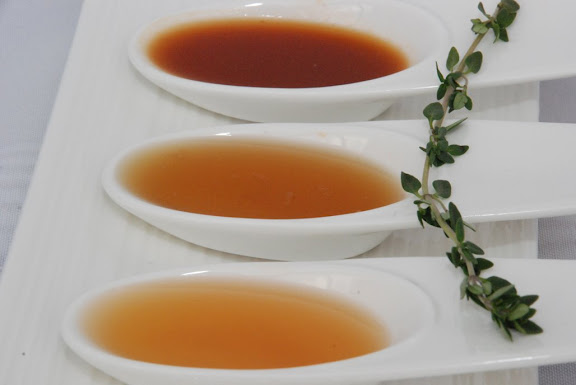
Veal stock 3 ways
Veal stock three ways

Remi and demi
In my reading up on stocks, I found a couple of other terms bandied about.

A remouillage (sometimes shortened to remi) is a portion of a previously made stock used as a starter for the new version of stock. Like a sourdough starter for bread, this is a starter for a stock that gives it a burst of flavor from your previous stock-making labor.

A demi-glace (often shortened to demi) is a stock that’s been reduced to a sauce, thick-like consistency. This reduced stock can be stored in ice cube trays, frozen, and stored in the freezer. A small amount of demi-glace can go a long way in boosting the flavor of a sauce.

Doing the Laundry
To follow the Thomas Keller way, check out his wonderful cookbook The French Laundry Cookbook (affiliate link) or go to a great blog called French Laundry at Home where there is a post about Veal Stock and follow along step-by-step.

Veal Stock Keller way mise en place
What’s that “bitter” celery doing there ‑ no celery allowed in TK’s veal stock!

Here is a great article to check out: Sweet, Sour, Salty, Bitter… and Umami an NPR article and podcast

"Good broth will resurrect the dead."
South American proverb

Recipe: Fond brun clair de veau (Basic recipe for brown stock)

from Le Cordon Bleu at Home (affiliate link)

Veal stock mise en place
Makes: 8 cups

6 pounds veal bones
2 pounds meaty veal knuckle
4 tablespoons tomato paste
24 cups water
3 medium carrots, chopped
3 onions, quartered
Salt
12 peppercorns
1 Bouquet Garni
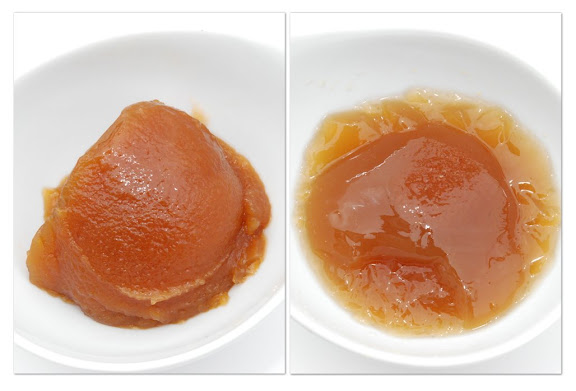
Veal stock gelled
Tasting Notes
Of all the brown stocks I tried, Thomas Keller’s version was by far the most gelatinous (see the photo on the left). It had a beautiful rosy, brown color and tasted delicious. My next favorite was the veal stock roasted with tomato sauce from the recipe above (see the photo on the right). It too gelled, although not as much, and tasted lighter and less tomato-y than Keller’s. These two will be stored in the freezer to be pulled out only for special occasions.

I also tried reducing the Keller version and the lightest version (beef stock not roasted) to a demi-glace. The Keller one became so gelled that I could form the gel into little balls. The beef stock remained liquid, but it improved its flavor slightly.

. . . . . . . . . .

Running total: $400.64 + $3.17 (I’m only counting 1 version of veal stock, not 5, and I’m counting the free one at that!) = $403.81

Butter used so far: 4 pounds, 28 tablespoons

More to Explore: